Last updated November 17, 2026



Free written scope consultation - allowances, timeline, and change-order rules on paper before a single trade is scheduled
Construction Emergency Preparedness Guide for Hialeah Homes
After Hurricane Irma, the median delay between damage and permitted repair start in Miami-Dade ran about 23 days. Contractors were available. What homeowners lacked was documentation: dated photos, permit numbers, material specifications. Adjusters couldn’t process claims, and emergency permits stalled. In Hialeah, where many homes carry 1970s and 1980s roof assemblies and original aluminum window frames, that gap between damage and repair lets water in for weeks. This guide is a protocol for closing it. You’ll build a documentation file before an event, understand how Miami-Dade’s emergency permit process actually works, and know exactly which three documents a contractor must produce before anyone touches your roof.
Quick Answer
Construction emergency preparedness in Hialeah means assembling a pre-event documentation file (permit records, NOA numbers, timestamped photos, replacement cost estimates stored in the cloud) before storm season, then following a fixed post-storm sequence: photograph damage in order, document water intrusion daily, and verify three documents (license, insurance certificate, signed scope) before any contractor starts. The documentation, not the phone number, is what shortens recovery from weeks to days.
Styles & brands we work with
- Kitchen remodeling
- Bathroom remodeling
- Home additions & ADU
- Roofing
- Windows & doors
- Driveway & pavers
- Fence
Table of Contents
- The Pre-Event Documentation File Every Hialeah Home Should Have
- How Miami-Dade Emergency Permits Work After a Declared Disaster
- Post-Storm Inspection Sequence: What to Photograph First
- Documenting Water Intrusion Day by Day
- The Contractor Vetting Shortcut for Post-Storm Conditions
- How to Identify Storm-Chaser Contractors
- Hialeah-Specific Risks: Roof Assemblies, Materials, and Codes
- Building a Realistic Recovery Timeline
The Pre-Event Documentation File Every Hialeah Home Should Have
This is the single highest-value thing you can do before a storm, and almost nobody does it. In our experience reviewing storm damage claims and repair scopes, the homes that recovered fastest had a folder ready. The homes that lost weeks were reconstructing paperwork from memory while water sat in the ceiling.
Your file lives in the cloud, not in a drawer. A paper folder in a flooded Hialeah home is gone. Set up a cloud folder with this exact structure:
- Roof records – the original permit number and date, the final inspection sign-off, and the material specification sheet. If your roof was replaced under a permit, that permit number is how the adjuster confirms the assembly’s age and code compliance.
- Window and door NOA numbers – every impact window and door sold in Florida carries a Notice of Acceptance number from Miami-Dade. That number proves your opening met the wind-load requirement at installation. You’ll find it on the label on the frame. Photograph it now. PGT and CGI windows both carry NOA labels, and losing that label after a storm costs you a documentation fight.
- Dated photographs – exterior elevations from four corners, the roof plane from ground level, the soffit and fascia lines, every window and door. Phone photos carry metadata timestamps that adjusters accept. Take them on a calm day with the date visible.
- Current replacement cost estimates – a written estimate from this year for a full roof replacement, window replacement, and fence rebuild. Not for a claim, but to benchmark what the insurance payout should look like. A quote from 2019 tells you nothing about a 2026 number.
- Policy documents – the declarations page, the deductible (especially your hurricane deductible, which is a percentage, not a flat number), and the insurer’s claim phone line.
Once assembled, this file takes twenty minutes to update each spring. In Hialeah, where summer storm systems build fast and Atlantic hurricane season runs June through November, that twenty minutes in April is the difference between a claim processed in a week and a claim processed in a month.
How Miami-Dade Emergency Permits Work After a Declared Disaster
Emergency permits in Miami-Dade don’t mean “skip the permit.” They mean a faster version of the same process, and which repairs qualify is specific. Understanding this before a storm keeps you from a code violation during a crisis, when the last thing you need is an inspection failure.
After a local state of emergency is declared, Miami-Dade’s Building Department typically opens a streamlined process for damage-related repairs. The rules generally work like this:
- What qualifies: repairs directly tied to the storm event – roof covering replacement to match existing, window and door replacement, structural repair to damaged framing, fence and driveway repair where the damage is documented.
- What does not skip inspection: structural framing changes, electrical panel replacement, gas line work, and any change in the building envelope’s wind-load performance. These require full plan review and inspection regardless of emergency status.
- Fee schedule: emergency permits still carry fees based on valuation, and those fees are typically lower than a full commercial review but not waived. Budget for a few hundred dollars on a standard residential repair.
- What can never start early: structural work that alters the load path, electrical service changes, and gas work cannot begin before the electrical or gas inspection. No emergency declaration overrides a life-safety inspection.
Here’s the practical point. If your file is complete, the emergency permit application is a paperwork exercise. If your file is empty, you’re waiting on the county to reconstruct records while your tarp wears thin. The documentation is what turns an emergency permit into a same-week approval.
Post-Storm Inspection Sequence: What to Photograph First
Once the storm passes and it’s safe to walk outside, the order you document matters. Adjusters read photo sets in the order they arrive, and a chaotic set slows the claim. Follow this sequence:
- Wide establishing shots first – the front of the house, the street address visible if possible. This anchors every later photo to a location and date.
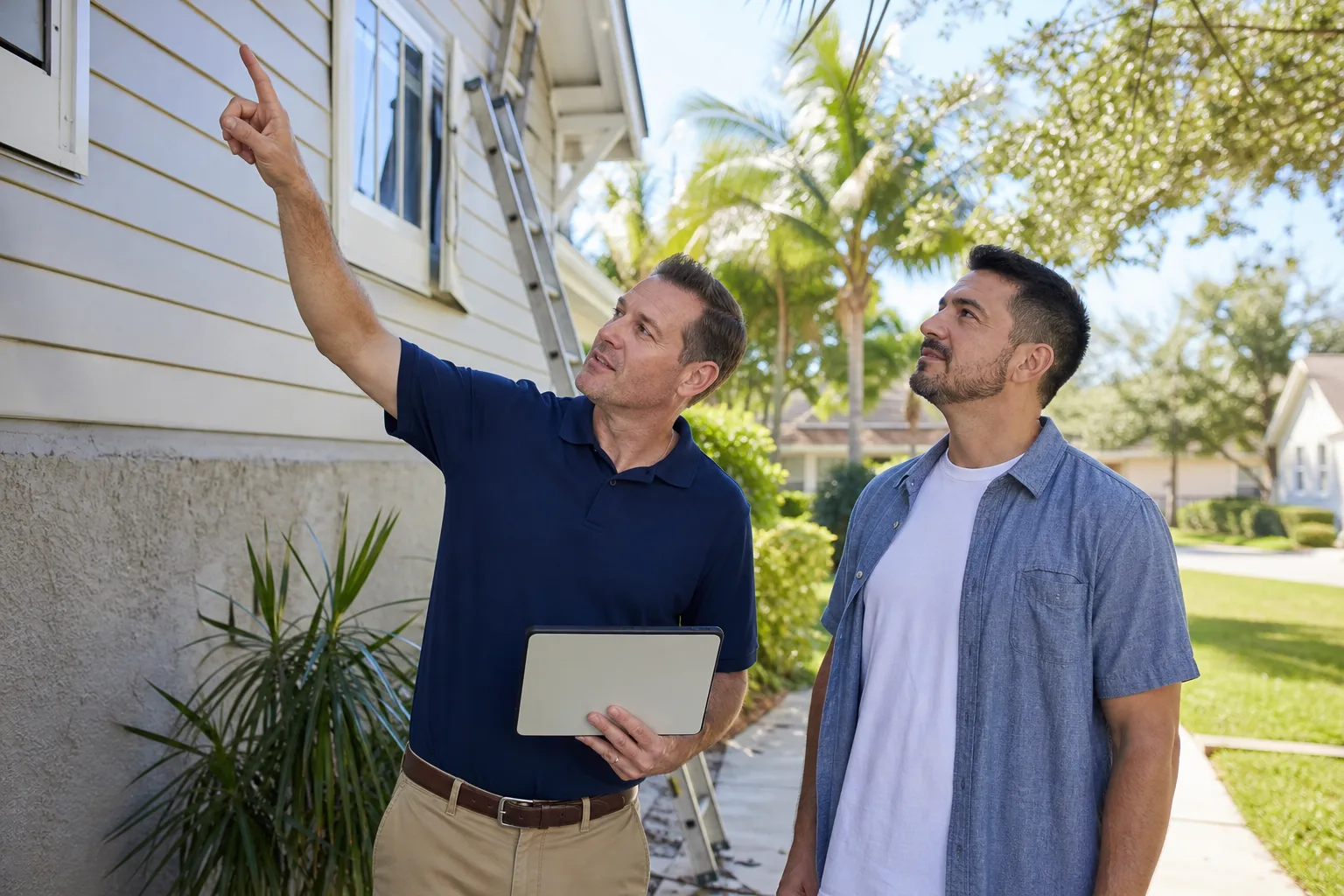
- Roof planes from ground level – every slope, from multiple angles. Missing shingles, lifted flashing, granule loss, and tarped sections. Don’t climb the roof; steep-roof and height work is genuinely dangerous, and a fall injury during recovery is worse than the delay. Ground-level telephoto shots document just as well.
- Ceiling and wall water staining – photograph the stain, then use a tape measure against the visible edge. The measurement proves progression, which the next section covers.
- Window and door frames – the exterior sealant line, the interior frame, and any water intrusion at the sill. Reference the NOA number label if it survives.
- Perimeter and yard – fence damage, driveway washout, tree impact on the roofline, standing water.
Timestamped photos affect settlement amounts directly. An adjuster comparing a day-one photo with a day-five photo can see whether the intrusion is active or stopped. That distinction separates a $1,200 dry-out from a $14,000 mold remediation. Photograph first, call the insurer second, arrange temporary protection third.
Documenting Water Intrusion Day by Day
Water intrusion that stops is a dry-out. Water intrusion that keeps running is a mold remediation. The difference lives in the daily record, and in Hialeah’s humidity, mold can establish in 24 to 48 hours after sustained moisture.
Here’s the discipline that has worked for our customers:
- Measure and photograph the same stain daily. Place a tape measure against the visible edge each morning, photograph it against the same wall, and note the date. A stain that grows two inches a day is an active intrusion that needs a tarp or temporary seal immediately.
- Record humidity where you can. A cheap hygrometer in the affected room tells you whether the space is drying or staying wet. Above 60% relative humidity for days, worth acting on.
- Photograph the tarp or temporary fix on the same day it goes up. Insurance and the emergency permit application both want evidence that you mitigated further damage. Mitigation photos protect the claim.
- Keep the record chronological. One folder per day, same naming convention. Adjusters appreciate a set they can follow without guessing.
This is the part nobody tells you: a well-documented progression can increase a claim settlement because it proves the damage was storm-related and not pre-existing. A month of dated photos is evidence. A memory is not.
The Contractor Vetting Shortcut for Post-Storm Conditions
Normal due diligence takes time you won’t have after a storm. So compress it to three documents that must exist, in writing, before any work starts. No exceptions, no matter how urgent the situation feels.
- Current state contractor license – verify it against the Florida DBPR database yourself. Ask for the license number, look it up, confirm it’s active and matches the company name on the contract. A license on a truck is not proof.
- Certificate of insurance – the actual certificate naming you and showing general liability and workers’ compensation coverage, with the insurer’s phone number so you can confirm it’s current. A certificate from a policy that lapsed three months ago protects nobody.
- A signed contract with a written scope and written price – line items for materials, labor, and schedule, with a flat number rather than a per-unit estimate. If the price can drift after work begins, it isn’t a price.
At Rowan Construction Group, this is the paperwork discipline the 365-Day Done Right Promise is built on: a written flat price before any work starts, and no change proceeding without a signed change order. That’s the standard any Hialeah homeowner should require after a storm, and a legitimate contractor will produce all three documents without pushback. Offers of “we’ll get you the paperwork later” mean the paperwork doesn’t exist.
How to Identify Storm-Chaser Contractors
Storm chasers are not a rumor. They arrive after every declared disaster, and they specialize in the pressure window: 48 to 72 hours after the storm, when homeowners are exhausted and frightened. Three signals identify them reliably.
- Out-of-state license plates and out-of-state licenses. Florida requires contractors to hold a Florida license to work here. A company licensed in another state and soliciting door-to-door in Hialeah is working outside the rules, and enforcement after they leave is very hard.
- Door-to-door solicitation within 48 hours of the storm. Legitimate local firms are busy with existing customers during that window. A stranger at your door the morning after is a stranger with a business model that depends on volume and speed.
- Pressure to sign an Assignment of Benefits (AOB) form. An AOB hands your insurance claim to the contractor. Florida law restricts this under F.S. 627.7152, which limits how and when an AOB can be signed and requires specific disclosures. A contractor pushing you to sign one before you’ve read it, or telling you it’s “just a form,” is the clearest single red flag in post-storm contracting.
One more, quieter signal: a written scope that’s a single paragraph. If it can’t say what material goes on the roof (a specific product line, a shingle layer count, an underlayment spec), they don’t intend to document the work.
Hialeah-Specific Risks: Roof Assemblies, Materials, and Codes
Hialeah has its own risk profile, and generic storm advice misses it. The city’s housing stock includes a large share of homes with roof assemblies from the 1970s and 1980s, many with original aluminum single-pane windows and older electrical service. Those facts change the preparedness calculus.
- Older roof assemblies fail differently. A 1980s shingle roof doesn’t usually lose its whole plane – it fails at the flashing, the fascia, and the penetrations. That’s where we see the first leaks in Hialeah after a wind event. Your pre-storm photos should specifically capture flashing lines and penetrations, because those are the likely first-failure points.
- Window upgrades matter more than in many markets. Many Hialeah homes still have original aluminum openings without impact ratings. Knowing your NOA numbers – or knowing you don’t have them – tells you in advance how your claim will go and whether offering protection (plywood, shutters) before the storm is the difference between a broken window and a dry room.
- Flat and low-slope roofs need different documentation. Many Hialeah additions and rear sections carry low-slope or flat roofing, which needs drain and scupper photographs before a storm. A blocked drain is a flooding cause, and an adjuster will ask.
- Fence and driveway damage is common and often under-claimed. Paver driveways and block fences take wind and water damage that homeowners don’t report. Photograph the perimeter. A paver drive that lifts after a flood event is a legitimate, documentable repair.
If your home needs a new roof, impact windows, or a rebuilt fence after an event, we handle each of those trades with the same written-price discipline. Our technicians have up to 19 years of experience, and crews are background-checked and uniformed. You can see our scope on the Driveway & Pavers in Hialeah page or the Fence Installation in Hialeah page.
Building a Realistic Recovery Timeline
Here’s what a fully prepared Hialeah homeowner can expect after a storm, and where the documentation earns its keep:
- Days 0-2: Photograph, document intrusion, tarp or temporarily seal. Log the sequence. Call the insurer and open the claim.
- Days 2-7: Adjuster inspection. Your file – permits, NOA labels, dated photos, prior replacement estimates – moves this from a “we’ll send an investigator” to a scoped claim.
- Days 5-14: Emergency permit application filed and approved for qualifying repairs. The permit number goes on the repair scope.
- Days 10-30: Contractors scope and schedule. The three vetting documents get checked before anyone starts.
- Days 30-plus: Repair work proceeds under the permit, with inspection sign-offs as the work completes.
The unprepared homeowner’s timeline adds weeks at every one of those steps. The prepared homeowner’s compresses them. That compression, not the contractor’s phone number, is what the guide is about.
Common Mistakes to Avoid
- Storing the documentation file on paper in the house. The house is the thing at risk. Cloud storage costs nothing and survives the storm.
- Not photographing the NOA labels while the windows are intact. After a storm, the label may be the first thing to go, and without it you’re reconstructing a wind-load rating from memory.
- Photographing damage in random order with no location anchors. Adjusters need to know what they’re looking at and where. Wide shot first, detail second, every time.
- Signing an AOB form under pressure. Under F.S. 627.7152, that signature transfers your claim. Read it, or refuse it and ask for a standard contract.
- Letting a contractor start before producing the license, insurance certificate, and signed scope. The paperwork is the protection. If it doesn’t exist, the work shouldn’t start.
- Measuring the water stain once and never again. One photo proves a stain exists. A daily series proves the damage is active, which changes the claim.
- Assuming emergency status waives inspection on structural, electrical, or gas work. It doesn’t. Those inspections are life-safety matters and remain required.
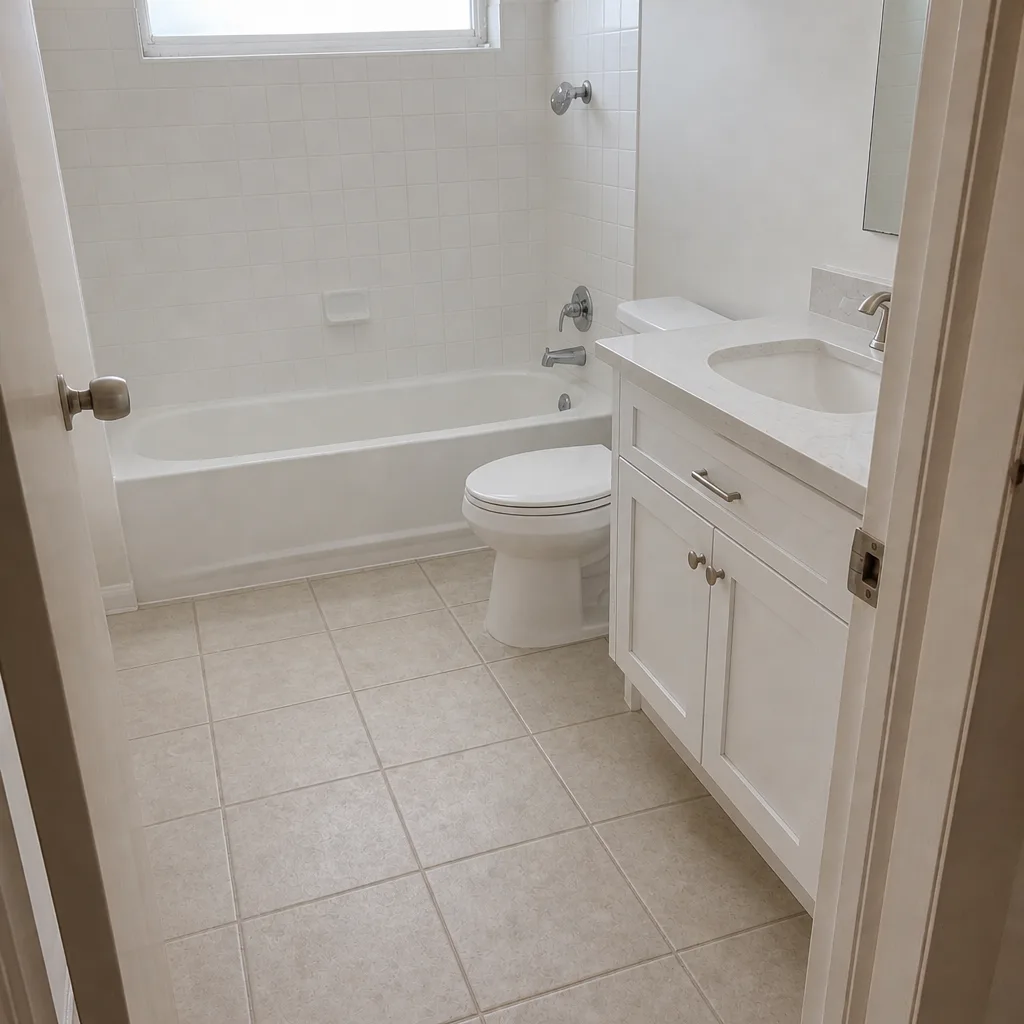
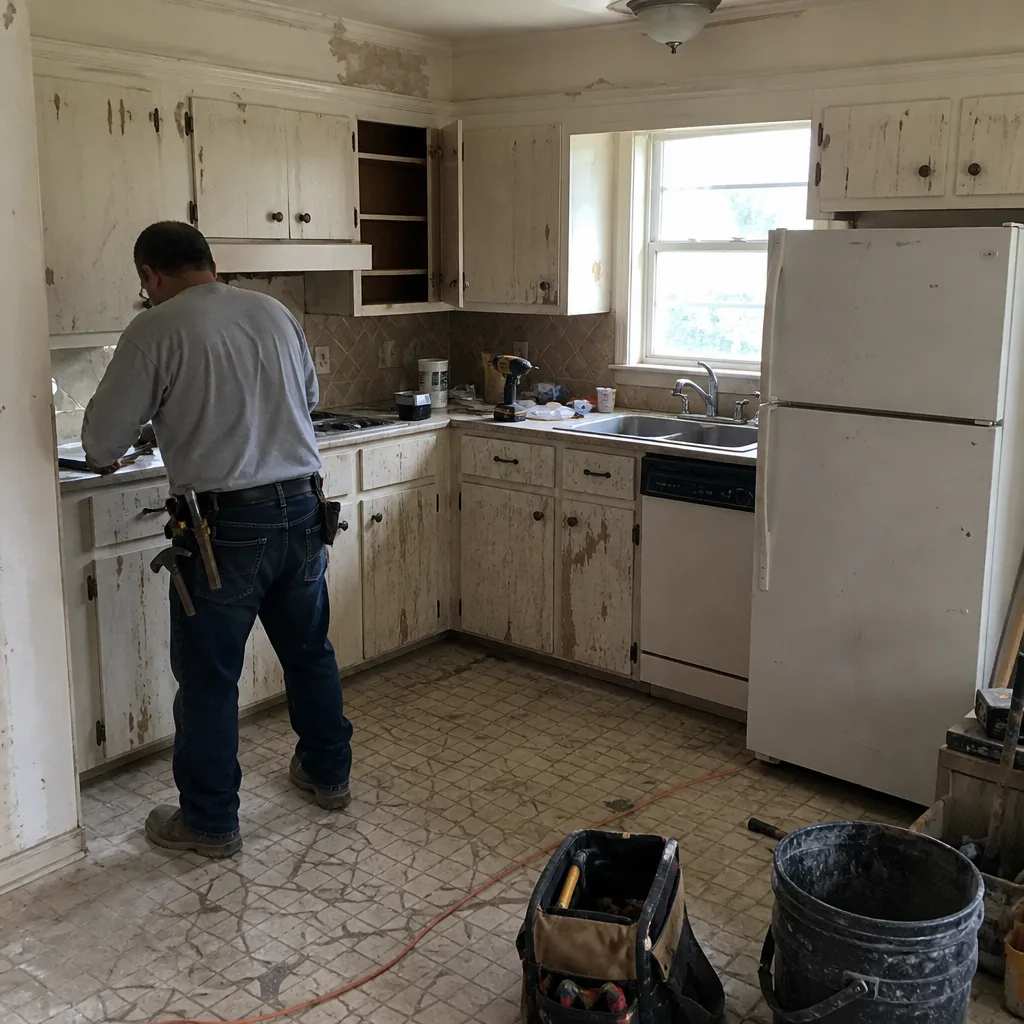
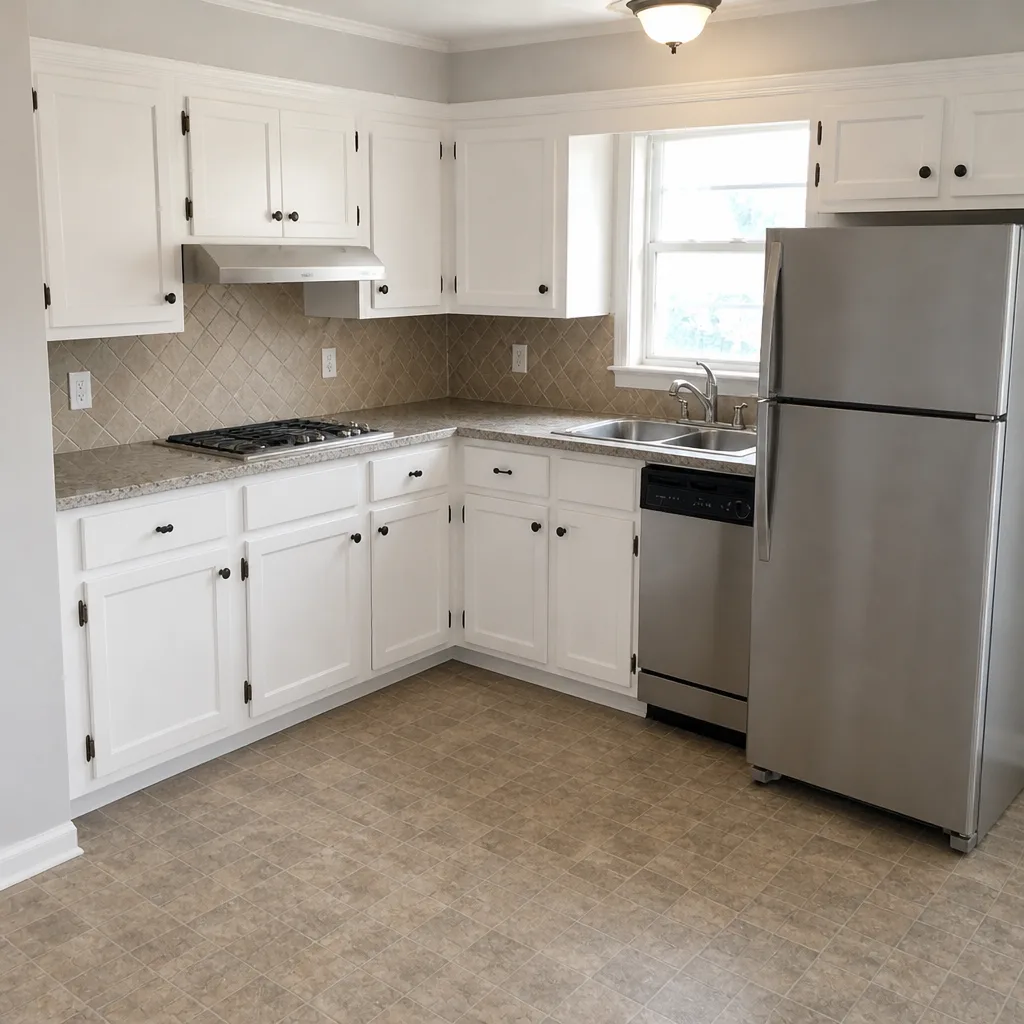
See the difference
 Before
 After
 Before
 After
 Before
 After
When to Call a Professional
Some repairs are do-it-yourself territory: rehanging a fence panel, replacing a shutter bolt. Others are not. Call a professional for any roof-plane work above ground level (steep-roof and height work is genuinely dangerous), any water intrusion that’s still active after a day, any electrical service damage, any gas line question, and any roof assembly that needs replacement under permit. In Hialeah, replacing a roof, an impact window set, or a structural fence section touches Miami-Dade code and inspection, and getting the scope and permit right the first time saves both money and weeks. Rowan Construction Group Hialeah offers free estimates in Hialeah – call (888) 836-5914 to schedule yours, and bring any written estimate you have for a free second opinion line by line.
Your Hialeah Storm-Season Prep Checklist
Print this from the cloud file, not on paper in the house. Run it every April before the June start of hurricane season.
- Photograph exterior elevations from four corners, the roof planes, soffit and fascia, each window and door (with NOA labels visible), and the perimeter fence and driveway.
- Confirm the cloud folder structure: roof, windows/doors, photos, estimates, policy.
- Refresh replacement cost estimates for roof, windows, fence, and any planned addition.
- Confirm insurance declarations page and hurricane deductible amount.
- Check the drainage path on any flat or low-slope roof section; photograph drains and scuppers.
- Save the DBPR license lookup and your insurer’s claim line in your phone.
If you’re planning a bigger project that affects your storm exposure – a new addition, an ADU, a full envelope upgrade – our Home Additions & ADU in Hialeah page covers how scoping and permits work, and our Rowan Construction Group Hialeah home page lays out the seven trades and the written-price model behind each.
Frequently Asked Questions

Document the roof permit and inspection records, every window and door NOA number, dated exterior photographs with timestamps, and current written replacement cost estimates, all stored in a cloud folder. These four items are what adjusters and the emergency permit application require, and missing them is the most common cause of claim delays.
Only certain storm-related repairs qualify for the streamlined emergency permit process, and structural, electrical, and gas work still require full inspection before starting. Roof covering, window, door, and fence repairs tied to documented storm damage can move quickly, but no emergency declaration waives a life-safety inspection. Call (888) 836-5914 for a free estimate and a written scope.
Three documents must exist before work starts: a current Florida state contractor license verifiable through the DBPR database, a current certificate of insurance showing general liability and workers’ compensation, and a signed contract with a written scope and flat price. A legitimate contractor produces all three without pressure. If they can’t, don’t start.
An Assignment of Benefits (AOB) transfers your insurance claim rights to the contractor, and Florida law under F.S. 627.7152 restricts how and when it can be signed. Refuse to sign one under pressure or before reading it in full. A standard contract with a written scope protects you without handing over the claim.
Yes. A daily series of dated photographs with measurements proves whether the intrusion is active or stopped, and that distinction often separates a dry-out cost from a full mold remediation cost. Adjusters rely on the progression record, so photograph the same stain daily with a tape measure in frame.
With a complete documentation file and an approved emergency permit, the inspection and permit stages compress into roughly the first two weeks and repair work schedules from there. Without documentation, the same steps can add three to four weeks. Call (888) 836-5914 for a free estimate – the written price comes before any work starts.
The Bottom Line
Preparedness in Hialeah is a documentation exercise, not a phone-number exercise. Build the cloud file this spring: roof permits, NOA numbers, dated photos, current replacement estimates. Follow the post-storm sequence – wide shots first, daily intrusion measurements, three vetting documents before work starts, no AOB under pressure. That file is what turns a 23-day delay into a same-week permit approval and a claim the adjuster can process without guessing. Rescue work after a storm is stressful enough; the paperwork shouldn’t be the bottleneck.
Contact

Ready to build your preparedness file, or need a written estimate for roof, windows, fence, or pavers before storm season? Call (888) 836-5914 for a free estimate. You’ll get a flat written price and written scope before any work starts, a free second opinion on any estimate you already have, and a documented photo record on every visit. Under the Haven Standard, the price is written before anyone picks up a tool.
Written by the team at Rowan Construction Group Hialeah.