Last updated November 17, 2026
Free written scope consultation - allowances, timeline, and change-order rules on paper before a single trade is scheduled
How Long Does Driveway & Pavers Take? Timelines and What to Expect
A contractor who quotes a two-day paver driveway is quoting only the installation days. They are not counting the permit window, the material lead time, or the 24-hour cure hold before sealing – any one of which can push the project out by a week. The realistic calendar for a residential paver driveway in Hialeah runs three to six weeks from signed contract to sealed, drivable surface, and the spread between the fast end and the slow end is almost entirely administrative, not physical. This guide walks the timeline phase by phase, in this market, with the waits that actually happen. You’ll learn where the days go, how driveway size scales non-linearly, and how to read a contractor’s schedule well enough to spot one that’s too tight to be honest.
Quick Answer
Plan on 3 to 6 weeks from signed contract to a sealed driveway you can park on. Installation itself takes 2 to 5 days for a typical Hialeah residential driveway, but permit processing at City Hall (5 to 15 business days), material lead time (3 days for stock, 2 to 4 weeks for special order), base compaction and weather holds, and a 24-hour cure before sealer add the rest. A 1,200 sq ft driveway is not twice as long as a 600 sq ft one, because demo and base work don’t scale at the same rate as paver setting.
Styles & brands we work with
- Kitchen remodeling
- Bathroom remodeling
- Home additions & ADU
- Roofing
- Windows & doors
- Driveway & pavers
- Fence
Table of Contents
- The Real Timeline, Phase by Phase
- Permits and the City of Hialeah Window
- Material Lead Time: Stock vs. Special Order
- How Driveway Size Changes the Clock
- South Florida Weather Holds
- Cure, Inspection, and Sealing Sequence
- How to Read a Project Schedule
- Common Mistakes to Avoid
The Real Timeline, Phase by Phase
Here is the sequence a paver driveway actually follows, with Hialeah-realistic durations for each step. A contractor who quotes a single number for the whole job is compressing several of these into one line – which is fine only if the written scope says so.
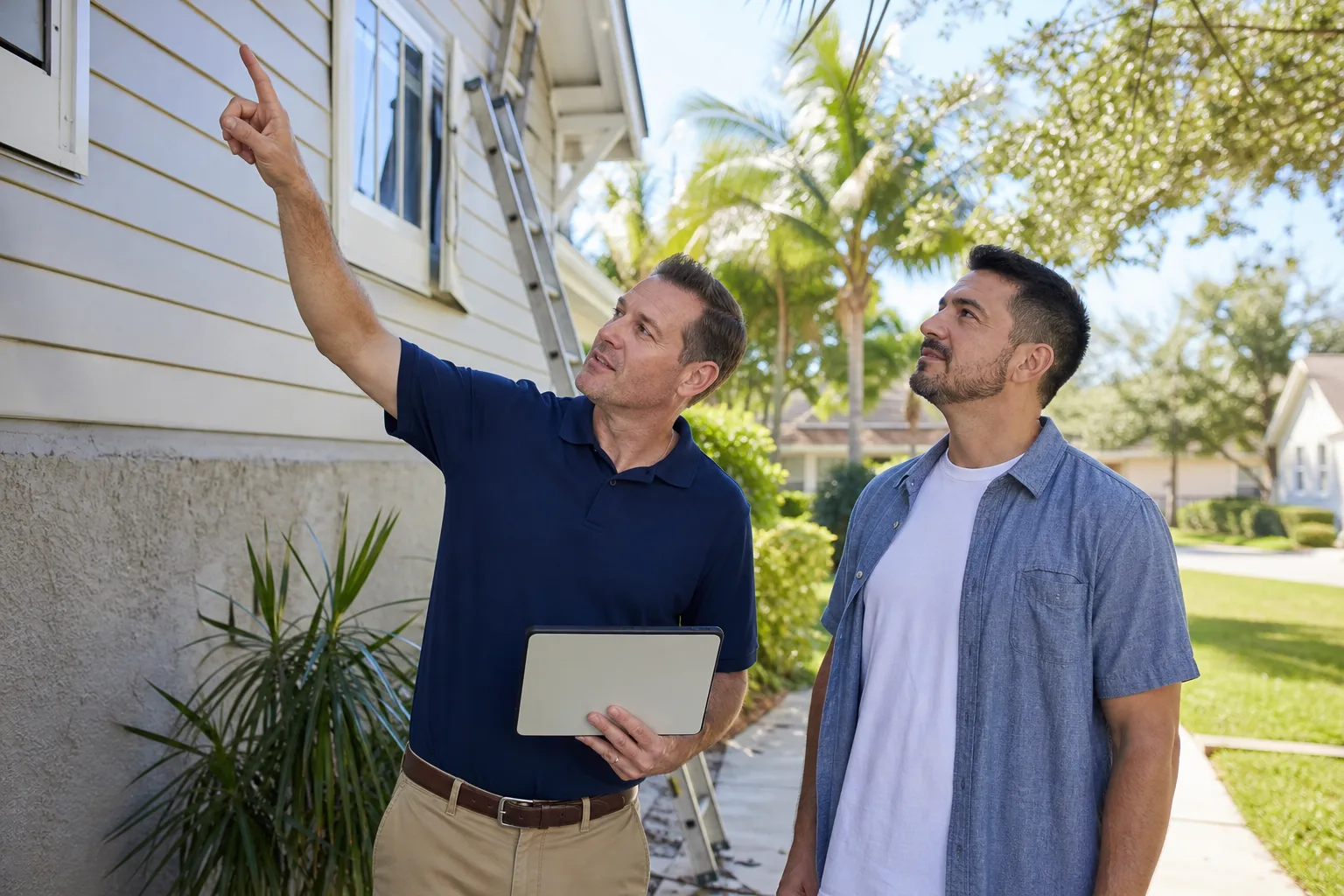
- Site measure and written scope (1 to 3 days). A crew walks the site, measures the area, notes drainage and any existing concrete to be removed, and produces a flat written price with a defined scope. Under The Haven Standard, this is delivered before any work starts.
- Permit application to issuance (5 to 15 business days). A standard residential driveway permit at the City of Hialeah runs this window. Corrections requests add days.
- Material order and delivery (3 days to 4 weeks). In-stock pavers from a distributor’s yard arrive in about 3 days. Special-order series can take 2 to 4 weeks.
- Demo and excavation (1 to 2 days). Removing existing concrete or asphalt, excavating to subgrade depth.
- Base installation and compaction (1 to 3 days). Graded aggregate base, laid in lifts, compacted. This is the phase that determines how long the driveway lasts.
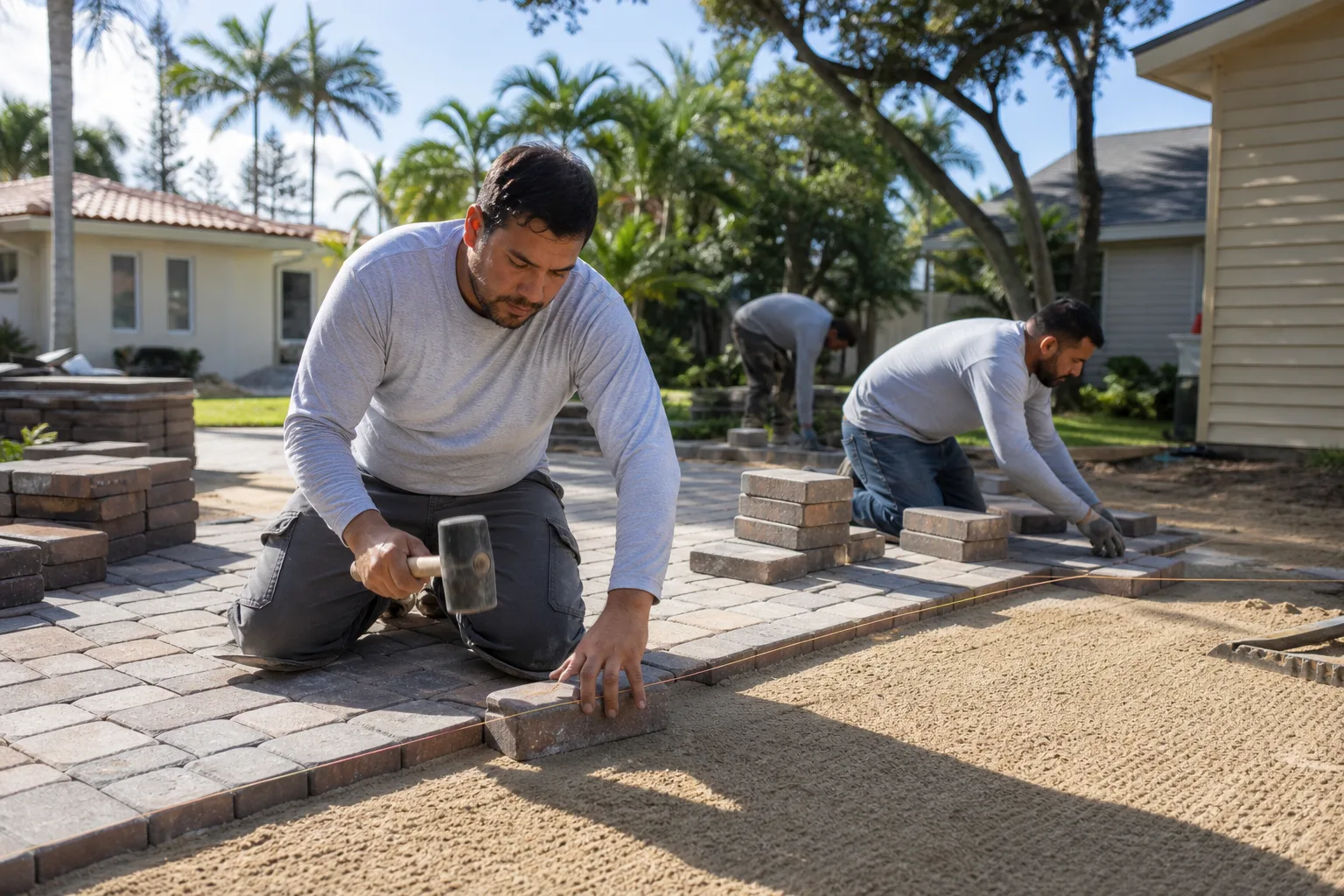
- Paver setting (1 to 2 days for most residential jobs). A crew sets roughly 500 to 600 sq ft per day.
- Polymeric sand, cure, inspection, sealer (3 to 5 days). Non-negotiable waits, covered below.
Add weather contingency days in the rainy season, and the calendar stretches out accordingly. For the full scope of what a Hialeah driveway project covers, see our Driveway & Pavers in Hialeah service page.
Permits and the City of Hialeah Window
A residential driveway permit in Hialeah typically moves from application to issuance in 5 to 15 business days. Factors that push it toward the long end include a corrections request from the plan reviewer, a property survey that doesn’t match the lot as built, or a proposed driveway that touches the right-of-way and requires additional sign-off.
Two things drive the timeline more than most homeowners expect. First, whether the driveway connects to a public street apron – that triggers review of the approach and can extend the window. Second, whether existing conditions on the lot match the records the city has on file. A 1950s-era block with a re-graded front yard can trip a reviewer who wants a current survey before signing off.
Permit issuance is not something to compress. The inspection after setting is tied to the permit, and beginning work before issuance can mean removal of what was already installed. A written scope should state plainly that the permit will be pulled and passed inspection. If a contractor says the permit isn’t needed for a full driveway replacement, ask them to put that in writing – and then get a second opinion.
Material Lead Time: Stock vs. Special Order
Material lead time is the phase a homeowner can most easily plan around, and where the difference between a three-week project and a six-week one usually lives.
- In-stock pavers (about 3 days): Standard colors and shapes from a distributor’s yard, ready to deliver on a short schedule.
- Special-order series (2 to 4 weeks): Belgard or Tremron specialty lines, unusual color blends, or specific sizing runs. These go into a manufacturing queue and there’s no compressing it.
The honest number is whatever the distributor confirms in writing. A crew that quotes your chosen specialty paver without calling the supplier for a current lead time is guessing. On a full driveway, we ask for the delivery confirmation date before the schedule is finalized, and we build it into the written timeline so the customer sees the same number we do.
The same principle applies across the other trades – order placed, delivery confirmed, then the calendar. The Rowan Construction Group Hialeah home page gives the overview of how we work across all seven residential trades, from kitchen to roofing to paving.
How Driveway Size Changes the Clock
Paver setting scales linearly, but nothing else does. A trained crew sets roughly 500 to 600 sq ft of pavers per day. That means a 1,200 sq ft driveway is about two days of setting, and a 600 sq ft driveway is about one. But demo, excavation, and base compaction do not double with area – they scale with the specific conditions of the site and the depth of material being removed.
Concretely:
- 600 sq ft driveway: 1 day setting, 1 day demo, 1 day base, plus cure and seal sequence.
- 1,200 sq ft driveway: roughly 2 days setting, 1 to 2 days demo, 1 to 2 days base. Adds about 2 to 3 calendar days over the smaller job, not double.
- 1,800 sq ft driveway: roughly 3 days setting, 2 to 3 days demo and base. Adds about 4 to 5 days total.
The variable that changes most with size isn’t the setting – it’s the staging area, haul-away volume, and whether the driveway wraps a corner or runs along a property line. Corner lots and long runs take an extra planning step because the base must be re-graded around the curve. The crew walks the layout before the first paver goes down.
South Florida Weather Holds
Rain resets the base-compaction clock. That’s the single most important sentence in this section.
Graded aggregate base has to be compacted at optimum moisture content – enough moisture to bind, not so much that the material moves under the plate compactor. After a rain event, the base beneath the surface needs to dry back. In practice that’s a 24 to 48 hour wait after the rain stops, longer if the storm was heavy or the site drains poorly. Setting pavers on saturated base is the fastest route to a driveway that settles and dips within a year.
In Hialeah, the practical scheduling window for moving quickly is December through April. May through November brings afternoon storms that can wipe out a base-compaction day in twenty minutes, so crews plan buffer days into the schedule during the rainy season rather than promising a finished calendar and breaking it. If your project is scheduled in August and your written timeline has no weather contingency in it, the contractor is either not paying attention or planning to skip steps when the rain comes.
Drainage planning matters as much as scheduling. Hialeah sits close to sea level and the water table is high, so a driveway needs a slope away from the house and often a gravel strip or channel at the sides. Factoring that into the base design adds a day but prevents a flooded garage after a heavy June storm. The Fence Installation in Hialeah page covers how side-yard drainage and fencing interact on the same lot.
Cure, Inspection, and Sealing Sequence
Once pavers are set, four waits follow, and none of them are contractor padding. Each step depends on the previous one being done correctly.
- Polymeric sand activation. Sand is swept into the joints and activated with water. It takes several hours to set.
- 24-hour cure. The surface must be fully dry before sealer goes on. Sealing over moisture traps it and causes hazing.
- Final inspection. The city inspector signs off on the completed work – timing depends on their schedule, typically within a few business days of the request.
- Sealer application and 4 to 6 hour dry time. Sealer locks in the joint sand, deepens color, and adds surface protection. No vehicles for at least the dry time, and best to wait a full 24 hours before heavy traffic if you can.
These four steps read as slow to a homeowner who wants to park the car. They are not. Skip the cure and you’re sealing moisture in. Skip the inspection and you can’t document the work. Skip the sealer and the polymeric sand begins to wash out at the first heavy rain. A reputable contractor protects the surface from the customer, not the other way around.
How to Read a Project Schedule
A credible written schedule for a paver driveway in Hialeah includes three things a tight-and-suspicious schedule leaves out: a permit buffer, weather contingency days, and an inspection hold.
- Permit buffer. A stated window, in business days, for application to issuance – not a line that reads “permit handled.”
- Weather contingency. One or more named weather days in the schedule, especially for May-through-November projects.
- Inspection hold. A block of days reserved for the city inspection, not folded into the “finish by” date.
More than one project we’ve walked into mid-schedule had a written plan that assumed the materials were already in the yard and the inspector would show up on a specific date. Both assumptions break. The written scope should state what happens when they do – who absorbs the delay, and whether the customer or the contractor eats the calendar slip.
If you’re coordinating a driveway with other work – a fence, an addition, or a full home addition that changes the approach – the schedule gets more complex and the discipline matters more. The Home Additions & ADU in Hialeah service page details how we coordinate multi-trade schedules on one site.
What a Written Quote Should Contain
A price without a timeline is half a quote. Under Clause 1 of The Haven Standard, the price is written before anyone starts work, and the written scope includes the schedule, not just the dollar figure. What to expect in writing:
- Flat price for the full scope, with line items for demo, base, pavers, sand, sealer, and permit.
- Specified paver brand, series, and color – not “pavers, customer’s choice.”
- Permit handling: applied for, paid for, and inspection included.
- Timeline in calendar days with permit buffer, weather contingency, and inspection hold stated.
- Change-order process: no work on any change without a signed change order.
- Written warranty, including the 365-Day Done Right Promise.
That last line holds the rest together. If it’s not done right within the first year, Rowan makes it right – printed on the page, backed by a terms page, not left to memory.
See the difference
 Before
 After
 Before
 After
 Before
 After
Common Mistakes to Avoid
- Trusting a two-day quote without asking what’s excluded. The two days almost always means setting pavers only – demo, base, cure, inspection, and sealing live outside that number. Ask the contractor to put every phase on the written schedule.
- Skipping the permit to save a week. Faster is not better when the work gets flagged. Pull the permit and pass the inspection; that document is what protects your investment at resale.
- Choosing a special-order paver for the color, without the lead time in writing. Belgard and Tremron specialty series are beautiful and worth the wait, but the wait is 2 to 4 weeks. Better to know that before the schedule gets built, not after.
- Scheduling in August without a weather plan. Hialeah’s rainy season is May through November. If your written schedule has no buffer for rain, ask why.
- Driving on the sealed surface the same day. Sealer needs 4 to 6 hours minimum, and heavier vehicles should wait longer. A driveway that gets a load too early shows tire haze and scuff marks permanently.
- Accepting a quote that doesn’t name the paver brand and series. If the written scope says “pavers,” the installer can substitute whatever’s in the yard on the day. Name the product.
- Skipping the second opinion. If a written estimate seems too good or too tight, bring it to a contractor who’ll review it line by line at no cost. It’s the fastest way to catch a scope gap before signing.
When to Call a Professional
Some jobs belong to a crew with a compactor, a laser level, and a written schedule. A concrete driveway that’s served for decades and has begun to crack and heave is the moment a full replacement makes sense – especially if the lot needs regrading for drainage or the front approach no longer matches the street. Any paver work over a few hundred square feet, any driveway with an existing slab that has to be removed, and any project requiring a permit and inspection is a professional scope. We’ve also seen DIY paver installations on sand base that look correct until the first rainy season and then settle and shift. Our technicians have up to 19 years of experience reading base conditions, drainage, and slope, and it shows in what the driveway looks like after three Hialeah summers. Rowan Construction Group Hialeah offers free estimates in Hialeah – call (888) 836-5914.
Frequently Asked Questions
Plan on 3 to 6 weeks from signed contract to sealed, drivable surface. The actual installation is 2 to 5 days for most residential driveways, but the permit window (5 to 15 business days), material lead time (3 days to 4 weeks), base compaction, cure, and inspection fill the calendar. Call (888) 836-5914 for a written timeline specific to your site – estimates are free.
Yes, a standard residential driveway replacement requires a permit through the City of Hialeah, and the inspection after setting is tied to it. Application to issuance runs 5 to 15 business days for most standard driveways. Your written scope should state that the permit is being pulled and the inspection included – if it doesn’t, ask before you sign.
Usually it’s the material, not the labor. A driveway using stock pavers goes in quickly; a special-order Belgard or Tremron series adds 2 to 4 weeks of lead time. Weather windows differ by month, curb-and-approach conditions differ by lot, and base depth differs by existing grade. Two driveways on the same street can be three weeks apart in total schedule for those reasons alone.
Yes, with buffer days built in. The constraint is base compaction – soil must return to optimum moisture content after rain, which can take 24 to 48 hours after the storm stops. Between May and November in Hialeah, expect the schedule to include a weather contingency of two or three days. A written schedule without one is not a real schedule.
After sealing, wait at least 4 to 6 hours before walking on it, and 24 hours before vehicles. If the sealer is applied late in the day, the practical answer is to park elsewhere overnight. Driving on it too soon traps tire haze in the sealer film, and that mark doesn’t come out with ordinary cleaning.
Not without a signed change order. Under The Haven Standard, no work proceeds on a change until the customer has signed off in writing – that’s the discipline that has kept Rowan projects within a few percent of the agreed cost across 4,000-plus jobs since 2007. If something beneath the surface (an old slab, unexpected utilities, deeper base excavation) turns up, we document it, show you the photo record, and quote the change before touching anything. Call (888) 836-5914 for an exact written quote – estimates are free.
The Bottom Line
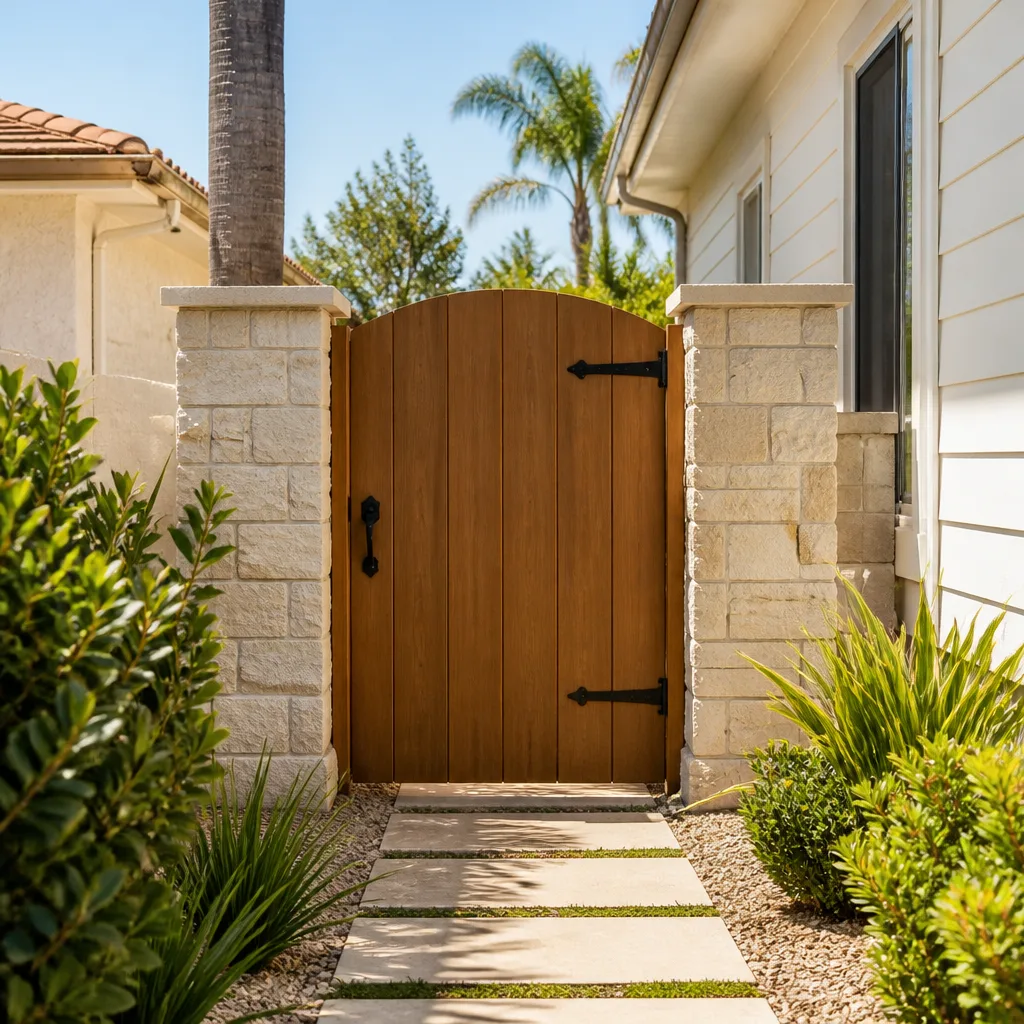
The timeline for a paver driveway in Hialeah is set by steps that don’t compress: permit processing, material lead time, base compaction, cure, inspection, and sealing. Installation itself is the shortest part of the calendar, at 2 to 5 days for most residential driveways. Plan on 3 to 6 weeks from signed contract to sealed surface, and read any contractor’s schedule against the phase list in this guide. A quote that’s suspiciously tight is a signal, not a bargain. Get the price, the timeline, and the change-order process in writing before you sign – that’s what The Haven Standard is built around, and it’s why our projects stay near the number we agree to.
Rowan Construction Group Hialeah brings the same discipline across all seven trades, from kitchen remodels to roofing to full home additions. If you’re ready to see what your driveway will actually cost and how long it will actually take, call (888) 836-5914 for a free estimate and a written timeline you can hold us to.
Written by the team at Rowan Construction Group Hialeah.