Last updated November 17, 2026


Free written scope consultation - allowances, timeline, and change-order rules on paper before a single trade is scheduled
Fence Installation Maintenance Schedule: What to Do and When
Here’s a fact that costs Hialeah homeowners real money every year: a wood fence painted in September, during peak humidity and near-daily afternoon rain, can begin peeling within six months. That same coating applied in December, when relative humidity in South Florida typically drops to the 55% range, often holds for three to five years. The product data sheet on the can says exactly this. Most people never read it. What follows is a maintenance schedule built around the conditions that actually affect fences in Hialeah – not a generic quarterly checklist copied from a national blog – with pass/fail criteria, timing windows, and a table showing what deferring each task costs you.
Quick Answer
A working fence maintenance schedule in Hialeah is built around two annual events: a pre-hurricane-season inspection in May and a post-storm structural check after any named system passes through. Everything else – wood cleaning in October, staining or painting in November through January, hardware torque checks, footing checks – fits around those two anchors. Cleaning and cosmetic work matter, but skipping the May inspection is what turns a $150 repair into a $2,500 fence rebuild.
Styles & brands we work with
- Kitchen remodeling
- Bathroom remodeling
- Home additions & ADU
- Roofing
- Windows & doors
- Driveway & pavers
- Fence
Table of Contents
- Why Hialeah Fences Follow a Different Calendar
- The May Pre-Season Inspection: The Most Important Task of the Year
- The Post-Storm Inspection Protocol
- Wood Fence Maintenance: Cleaning, Staining, and the Probing Test
- Aluminum and Vinyl: What Actually Needs Doing
- The Cost of Deferral: What Skipping a Task Actually Costs
- Common Mistakes to Avoid
- When to Call a Professional
Why Hialeah Fences Follow a Different Calendar
Most fence maintenance guides are written for a temperate climate with four seasons and a long, dry summer. Hialeah doesn’t have that. What we have is a wet season from roughly May through October, with afternoon thunderstorms that drop more water in an hour than some northern cities see in a week, followed by a dry season that brings lower humidity and cooler temperatures. On top of that sits hurricane season, June 1 through November 30, with the statistical peak running from mid-August into October.
That pattern changes which tasks matter and when:
- Moisture-driven decay happens from May to October. Mold, mildew, and wood rot do their damage during the wet months, not the dry ones. This is why October – after peak mold season, before the dry window – is the right time to clean a wood fence.
- Coating adhesion depends on temperature and humidity at application, not on the brand on the can. Most exterior stains and paints specify a temperature range and a maximum relative humidity. In Hialeah, that window realistically opens in November and closes by late January.
- Wind events are the single largest cause of fence failure in Hialeah, and they’re predictable in timing even if not in severity. A post that’s already loose when a tropical system arrives doesn’t just fail – it can damage adjacent panels and hardware on the way down.
The soil matters too. Much of Hialeah sits on limestone-derived soils and fill that can be shallow over rock, and drainage varies block to block. Fence footings that hold fine in one yard can be undermined by erosion in another after a heavy rain season. That’s why the inspection checklist below includes footing exposure as a pass/fail item, not an afterthought.
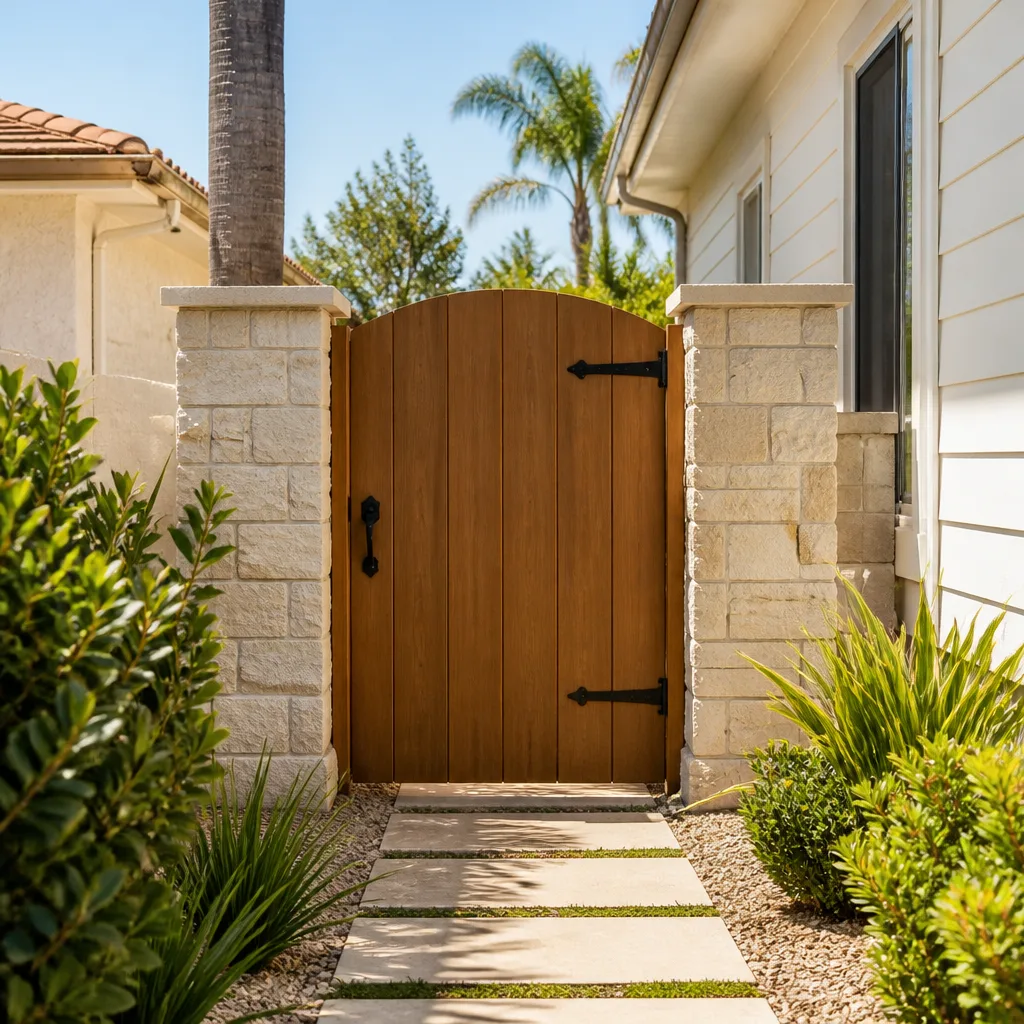
If you’re planning a new fence rather than maintaining an existing one, our Fence Installation in Hialeah page covers materials, permits, and what a proper footing looks like before the posts go in.
The May Pre-Season Inspection: The Most Important Task of the Year
If you do one thing on this schedule, do the May inspection. The goal is to find and fix anything that would fail under wind load, weeks before the first storm has a chance to test it. Here’s the checklist with actual pass/fail criteria:
- Post plumb check. Hold a 4-foot level against each post, or sight down the line of the fence. A post leaning more than 1 inch out of plumb per foot of height warrants correction before wind season. At 6 feet tall, that’s roughly 6 inches of lean at the top of the post – but by the time you see that much, the footing has usually already failed. Check every post, not just the visible ones.
- Hardware torque check. Walk the fence line with a socket wrench or driver and check every bracket, hinge, and rail fastener. Loose connections concentrate stress during wind events. A bracket that’s finger-loose in May is a bracket that tears out in August.
- Gate operation. Open and close every gate fully. A gate that drags, sags, or won’t latch is telling you the hinge post has moved or the hinges are worn. Gates are the most stressed part of any fence and the first to fail.
- Footing exposure. Look at the base of every post for soil erosion. If more than 2 – 3 inches of the concrete footing is exposed, or if you can see the post pulling out of the ground, that post needs attention before wind season. Erosion is common in Hialeah after a wet spring, especially on slopes and near downspouts.
- Panel and rail check. Push on each panel. Flex that feels excessive suggests a loose fastener or a compromised post. Note anything that moves more than the rest.
This inspection takes an afternoon on a typical residential fence. It’s also the inspection that separates homeowners who replace a $40 bracket in May from homeowners who file an insurance claim in September.
The Post-Storm Inspection Protocol
After any significant storm passes through Hialeah, the order of inspection matters as much as the inspection itself. Structural problems come first, because a fence with a compromised post is dangerous to stand next to, let alone lean on. Work in this sequence:
- Structural checks first. Walk the line and look for post movement and footing exposure. Any post that has moved more than 2 inches from its original position – leaning, rotated, or visibly displaced – requires evaluation by a contractor before the fence is loaded by the next wind event. Don’t just straighten it and move on; the footing is the question.
- Connection hardware second. Check brackets, hinges, and fasteners for bending, pulling, or missing pieces. Storm loading reveals weak connections that looked fine in calm weather.
- Panel damage third. Look for cracked, split, or missing pickets and panels. Cosmetic damage can wait; structural damage cannot.
One detail worth knowing: after a storm, don’t rush to pressure-wash or stain damaged wood. Wet wood won’t accept a coating properly, and you’ll be redoing it. Wait for the wood to dry to its normal moisture level, which in Hialeah after a storm can take a week or more depending on sun exposure.
The post-storm inspection is also when we see the most deferred-maintenance failures. A fence that passed a May inspection usually comes through a storm with cosmetic damage. A fence that skipped two or three Mays often doesn’t. If a storm has left your fence visibly leaning or your gate unusable, our Rowan Construction Group Hialeah home page is the place to start, and a free estimate will tell you whether repair or replacement is the honest answer.
Wood Fence Maintenance: Cleaning, Staining, and the Probing Test
Wood is the material that rewards timing most. Here’s the schedule that works in Hialeah’s climate.
October: Clean After Peak Mold Season
By October, a wood fence in Hialeah has been through five months of humidity and rain. Mold and mildew have had their season. Cleaning now – with a wood-safe cleaner, not a harsh bleach mix that damages the grain – removes the growth before it works into the wood, and gives the surface time to dry before the coating window opens.
November through January: Stain or Paint in the Right Window
This is the window. Most exterior wood coatings specify application temperatures roughly between 50°F and 80°F and a maximum relative humidity. In Hialeah, December typically delivers the most reliable combination of moderate temperatures and lower humidity. September and early October are the worst – high humidity and frequent rain mean the coating can’t cure properly, and adhesion failure within six months is common. Read the data sheet on the product you’re using; the numbers are printed there, and they matter more than the label’s marketing copy.
The Probing Test: Find Rot Before It Spreads
Before you clean or coat, test for rot at the ground line – the place where wood fences fail first. Use a screwdriver or an awl and probe the wood at the base of each post and at the bottom of each picket, about an inch above grade:
- Solid resistance: the wood is sound. Move on.
- Soft or spongy resistance: early rot. Treat it now, and plan to replace that piece within the year.
- The tool sinks in easily: advanced rot. That post or picket needs replacement, and you should check the adjacent ones – rot spreads through contact and moisture wicking.
Catch rot at the spongy stage and you’re replacing a picket. Catch it a year later and you’re replacing a post and possibly a section of rail. In our experience, the difference between a $60 repair and a $600 repair is usually one probing test done in November instead of skipped.
Aluminum and Vinyl: What Actually Needs Doing
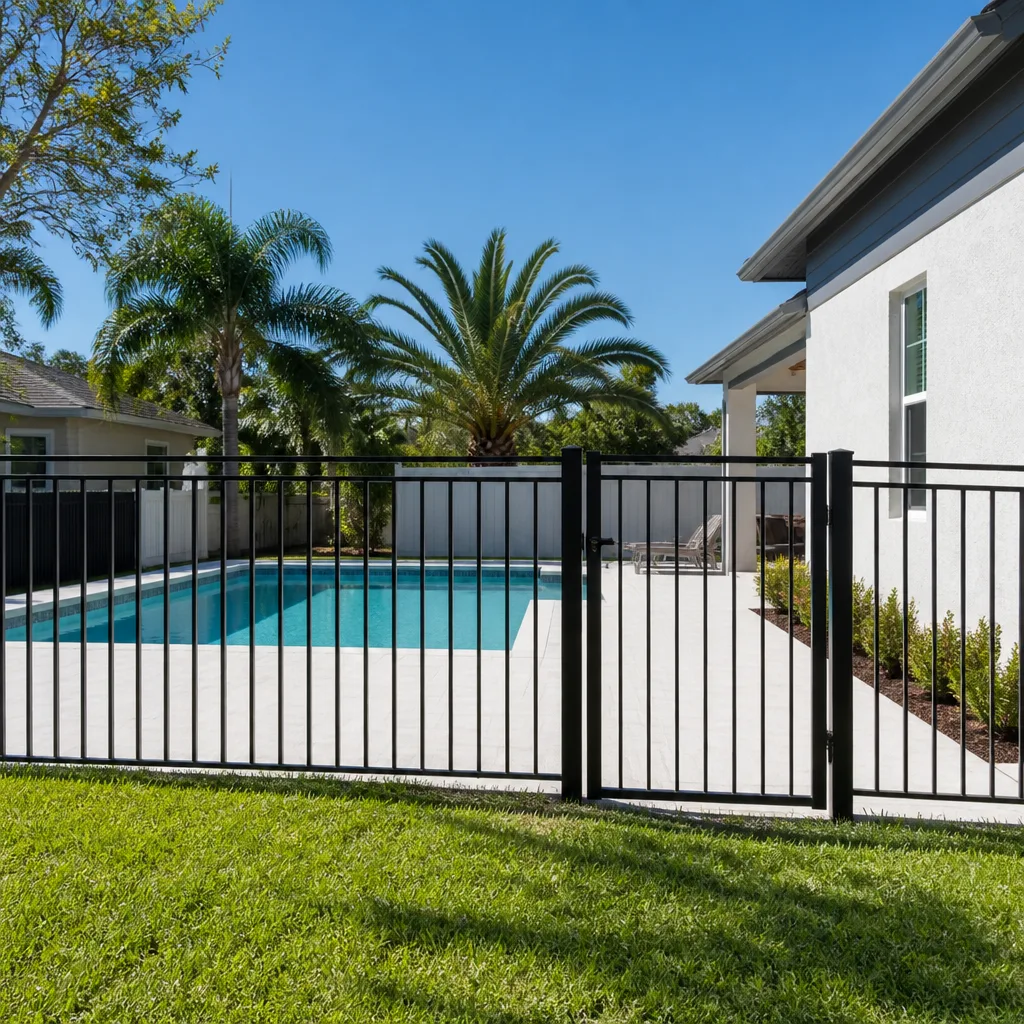
Aluminum and vinyl fences are sold as low-maintenance, and that’s mostly true – but “low maintenance” isn’t “no maintenance,” and a lot of the products sold for these materials don’t do anything structural. Here’s the honest split.
What Actually Matters
- Fastener inspection. Check screws and brackets at every post and rail connection after wind events and once in May. Aluminum and vinyl panels can flex under wind load, and fasteners work loose over time.
- Replace steel screws with stainless. This is the one upgrade that genuinely extends fence life in Hialeah. Standard steel fasteners corrode in coastal South Florida humidity and eventually fail, often leaving rust stains on the fence. Stainless steel fasteners cost more per screw and are worth it. If your fence was installed with steel screws, plan to replace them as you find corrosion.
- UV protectant on vinyl. Vinyl fences in Hialeah deal with intense sun year-round. A UV protectant applied according to the manufacturer’s schedule helps prevent chalking and color fade. Follow the product’s instructions; more isn’t better.
What’s Mostly Sold, Not Needed
- Aggressive cleaning regimens for aluminum. Aluminum doesn’t rot. A rinse and occasional mild wash is enough.
- Specialty “restorer” products for vinyl that claim to reverse fading. They don’t. Faded vinyl is faded vinyl.
- Annual professional “tune-ups” for a fence with no moving parts beyond the gate. Inspect the gate; skip the rest.
The point isn’t that these materials are maintenance-free. It’s that the maintenance that matters is structural – fasteners and connections – not cosmetic. Spend your maintenance budget there.
The Cost of Deferral: What Skipping a Task Actually Costs
If your maintenance budget is limited this year, this table is for you. It shows what skipping each task for one additional year typically costs in repair terms in the Hialeah market. These are ranges based on what we see on estimates, not guesses.
| Task Skipped for One Year | Typical Consequence | Repair Cost Range |
|---|---|---|
| May pre-season inspection | Loose post or bracket fails in a storm, taking adjacent panel with it | $400 – $1,800 |
| Hardware torque check | Bracket tear-out damages rail and post; gate hinge fails | $150 – $600 |
| Footing erosion check | Undermined post leans; full post replacement in concrete | $250 – $700 per post |
| October wood cleaning | Mold and mildew work into grain; coating won’t adhere next season | $200 – $500 (extra prep) |
| November – January staining window | Coating applied off-window fails within months; full redo required | $600 – $2,000 for a typical yard |
| Probing test at ground line | Rot spreads from picket to post to rail; section replacement | $60 repair becomes $400 – $900 |
| Stainless fastener replacement | Corroded screws fail; rust staining; panel detachment in wind | $100 – $350 plus staining |
The pattern is consistent: every task on this schedule costs less to do than to skip. The May inspection is the highest-leverage item because failures there cascade into storm damage, and storm damage is where the numbers get large. If you can only do one thing this year, do the May inspection.
If fencing isn’t the only item on your list, our Driveway & Pavers in Hialeah page covers a similar maintenance logic for hardscape – and many of the same footing and drainage principles apply.
Common Mistakes to Avoid
- Following a national seasonal calendar. A guide written for a temperate climate will tell you to stain in spring and inspect in fall. In Hialeah, that timing produces adhesion failure and misses the wind season entirely. Build the schedule around May and the post-storm window.
- Staining in September. Peak humidity and frequent rain mean the coating can’t cure properly. We’ve seen fences where a September application peeled within six months. The same product applied in December at 55% humidity held for years.
- Pressure-washing wet wood. Blasting wood that’s still wet from a storm or a rainy stretch drives water into the grain and raises it. Wait for dry conditions.
- Straightening a storm-moved post without checking the footing. If a post has moved more than 2 inches, the footing is the likely cause. Straightening it just resets the failure clock.
- Missing the footing erosion check. Hialeah’s soils and drainage vary block to block. A post with 3 inches of exposed footing in May is a post that fails in August.
- Buying steel fasteners for a coastal installation. Steel screws corrode in South Florida humidity and leave rust stains. Stainless is the right call for Hialeah fences.
- Confusing cosmetic products with structural maintenance. Vinyl “restorers” and aluminum polishing kits don’t extend fence life. Fastener inspection does.
When to Call a Professional
Most of this schedule is homeowner work: probing, checking plumb, tightening hardware, applying a coating in the correct window. Call a professional in these specific situations:
- Any post has moved more than 2 inches after a storm, or is visibly leaning more than 1 inch per foot of height in May.
- Footing exposure is more than a few inches, or you can see the post pulling away from the concrete.
- Rot has reached the posts or rails, not just the pickets.
- A fence section has come down or is unsafe to stand near.
- You’re deciding between repair and replacement and want an honest assessment – and a written price for each option before you decide.
Under Clause 1 of The Haven Standard, the price is written before anyone starts, and no work proceeds on a change until a change order is signed. Every visit includes a documented photo record as a standard deliverable, so you know what was found and what was done. If you’re planning a larger project, our Home Additions & ADU in Hialeah page covers how the same documentation discipline applies to a build. Rowan Construction Group Hialeah offers free estimates in Hialeah – call (888) 836-5914 to schedule yours, or bring a competitor’s quote and we’ll review it line by line at no charge.
See the difference
 Before
 After
 Before
 After
 Before
 After
Frequently Asked Questions
November through January is the reliable window in Hialeah, when temperatures are moderate and relative humidity typically drops into the range most exterior coatings specify. September and early October should be avoided because humidity and frequent rain prevent proper curing. Call (888) 836-5914 for an exact quote on staining and prep – estimates are free.
Twice a year minimum: a pre-hurricane-season inspection in May and a structural check after any significant storm. These two inspections are more important than any quarterly cleaning routine because they catch wind-load failures before they become storm damage. A mid-season hardware check and an October cleaning round out the schedule.
More than 1 inch out of plumb per foot of height warrants correction before wind season. After a storm, any post that has moved more than 2 inches from its original position needs contractor evaluation before the fence takes load from the next wind event. Call (888) 836-5914 to schedule a free assessment.
Less than wood, but the maintenance that matters is structural. Inspect fasteners and brackets in May and after storms, replace steel screws with stainless in coastal conditions, and apply a UV protectant to vinyl per the manufacturer’s schedule. Skip the cosmetic “restorer” products; they don’t extend fence life.
Repair usually doesn’t require a permit; a full replacement often does, and requirements can vary by property type and location. Check with the City of Hialeah before starting a replacement, or call us and we’ll walk through what your project needs. Estimates are free and come with a written scope. Call (888) 836-5914.
If the posts and footings are sound, maintenance reliably extends fence life by years, and the cost-benefit is clear – a $60 picket replacement versus a section rebuild. If posts have moved, footings are undermined, or rot has reached the rails, replacement is often the honest answer. We’ll tell you which it is, with a written price for both options before you commit. Call (888) 836-5914 to schedule your free estimate.
The Bottom Line
A Hialeah fence maintenance schedule works when it’s organized around wind, not the calendar. The May pre-season inspection – post plumb, hardware torque, gate operation, footing exposure – is the highest-leverage task of the year, and it’s the one most homeowners skip. The post-storm protocol comes second: structural checks, then hardware, then panels, with any post movement over 2 inches flagged for contractor evaluation. Wood gets cleaned in October, probed for rot in November, and coated in the November – January humidity window. Metal and vinyl get fastener inspection and stainless hardware, not cosmetic products. Every task on this schedule costs less to do than to skip. If you want a written assessment and a flat price before any work starts, Rowan Construction Group Hialeah delivers exactly that – call (888) 836-5914 for your free estimate.
Written by the team at Rowan Construction Group Hialeah.