Last updated November 17, 2026


Free written scope consultation - allowances, timeline, and change-order rules on paper before a single trade is scheduled
Fence Installation Troubleshooting: Common Problems and How to Fix Them
Most fence problems that show up after a storm aren’t material failures. They’re installation failures the weather exposed. In Hialeah, where summer squalls push wind against a fence line and the wet season saturates the soil for months, a post that leans in October usually reveals a decision made on install day. The pattern of the failure tells you which step was wrong. A post that leans but sits on a footing that’s still solid and plumb has a different root cause, and a different fix, than a post whose footing has heaved up out of the ground. Treat them the same and one repair holds while the other fails again by the next hurricane season. This guide reads the visible damage back to the installation step that caused it.
Quick Answer
A leaning fence post is almost never a material problem. It’s one of three installation issues: wind load that exceeded the footing’s embedment depth, soil heave from moisture expansion that tilted an intact footing, or an undersized or cracked footing that failed outright. Diagnose which one you have before you touch the post, because each takes a different repair. A sagging gate follows the same logic: identify whether the hinge, the post plumb, or the gate frame is at fault before replacing hardware.
Styles & brands we work with
- Kitchen remodeling
- Bathroom remodeling
- Home additions & ADU
- Roofing
- Windows & doors
- Driveway & pavers
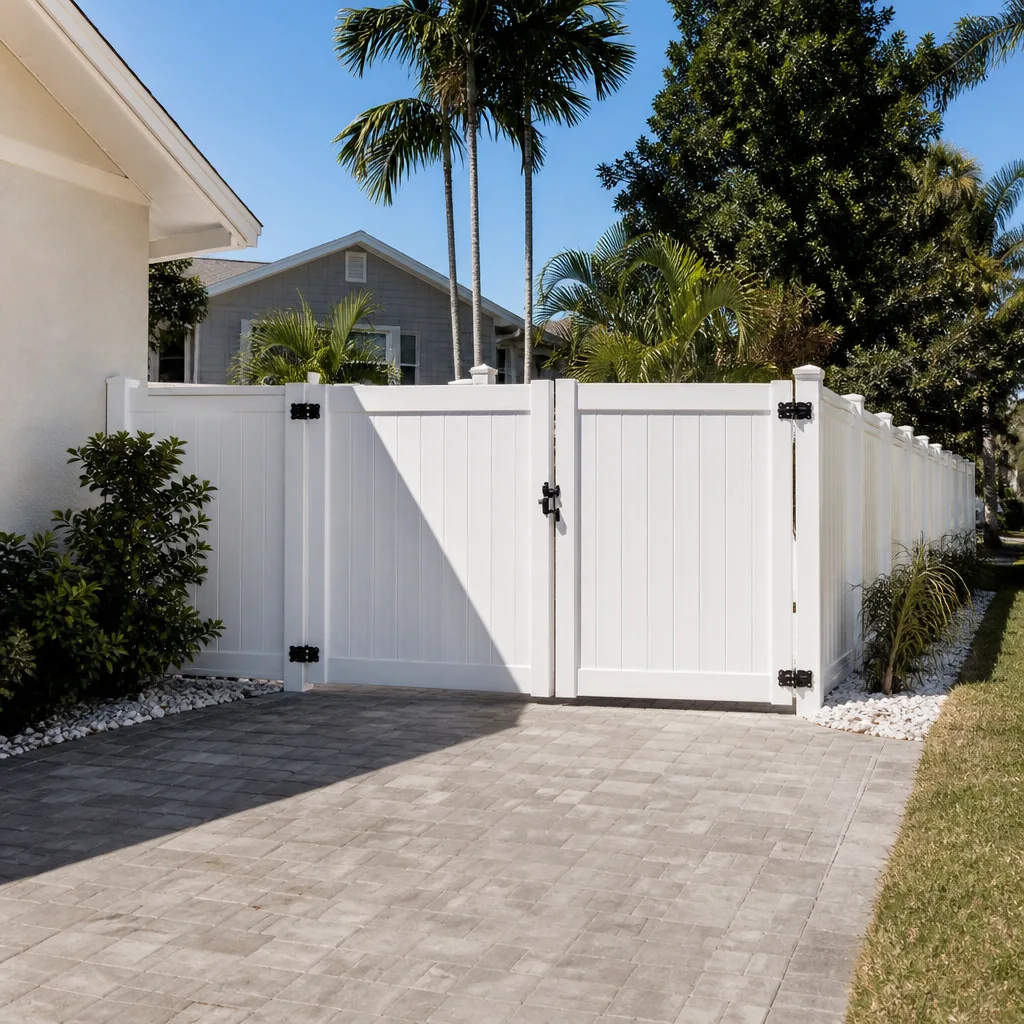
- Fence
Table of Contents
- Diagnosing a Leaning Post by Its Failure Pattern
- Footing Failure: Wind Load, Soil Heave, and Concrete
- Why Gates Sag: Hinge, Post Plumb, or Frame Twist
- The Gap at the Bottom of the Fence
- Corrosion Patterns by Material
- Post-Storm Inspection Protocol
- Common Mistakes to Avoid
- When to Call a Professional
Diagnosing a Leaning Post by Its Failure Pattern
Start with a level and a slow walk down the fence line. The direction a post leans, and whether the footing moved with it, narrows the root cause before you dig anything up. In our experience across Hialeah neighborhoods, a post that leans toward the prevailing wind but whose concrete sits flush and flat is a wind-load exceedance. The footing held. The post moved inside it.
Here’s the decision tree we run on a leaning post:
- Check the footing level. Lay a level across the concrete at ground line. If it’s still flat and flush, the footing didn’t move. The post displaced within the footing, usually because the embedment depth or the concrete volume was short of what the wind load required.
- Check for heaved concrete. If the concrete has risen above grade or tilted, the soil pushed it. Hialeah’s wet season swells the soil, and a footing set too shallow rides up with it.
- Check the concrete itself. Look for cracks, crumbling at the edges, or a footing narrower than the post warrants. A cracked or undersized footing is a failure, not a wind exceedance, and the whole footing needs replacement.
Three different patterns, three different repairs. A post displaced in a sound footing can often be reset and braced. A heaved footing needs to come out and be re-poured deeper. A failed footing gets replaced outright. Skipping the diagnosis and just shoving the post back plumb buys you until the next storm. For a full look at how our crews approach installation up front, see Fence Installation in Hialeah.
Footing Failure: Wind Load, Soil Heave, and Concrete
The footing is where most fence failures are decided, months before anyone notices a lean. Three things shorten that footing’s life in South Florida: embedment too shallow for the wind the fence will actually take, soil that expands and contracts with the wet season, and concrete that was under-mixed or under-volumed on the day of the pour.
On wind load, code guidance for a solid privacy fence in an exposed area calls for deeper embedment than a decorative picket fence, because the panel catches wind like a sail. A footing poured at a shallower depth for a lighter fence will let a solid panel walk out of plumb the first time a squall loads it. That’s the footing-intact lean we described above.
Soil heave is a Hialeah-specific wrinkle. Our rainy season saturates clay-heavy soils, they swell, and a footing set shallow gets pushed. The tell is concrete sitting above the surrounding grade. You can’t fix heave by pushing the post back; the footing has to be re-set deeper.
Footing failure is the cheapest to spot and the most expensive to ignore: cracked concrete, a footing that’s visibly smaller than the post base, or concrete that crumbles when you press it. That footing is done. Replace it.
Why Gates Sag: Hinge, Post Plumb, or Frame Twist
A gate that drags on the ground looks like a hinge problem. Often it isn’t. Before you buy new hinges, find out which of the three components actually moved.
- Hinge problem: the gate is square and the post is plumb, but the gate drops at the latch side and the hinge plates show wear or stripped screws. New hinges fix this.
- Post-plumb problem: the gate is square, the hinges are sound, but the post holding the gate has leaned. You’ll see the gate hang straight then drift as the post moves. Fixing the hinge here is a temporary repair that ruins the new hinges.
- Frame-twist problem: the post is plumb and the hinges are fine, but the gate itself is racked out of square. Hold a framing square across the stiles and rails. A gate that’s gone diagonal needs its frame re-braced, not new hardware.
The costly mistake is replacing hinges on an out-of-plumb gate post. The new hinges take the same load the old ones did, and the gate sags again in weeks, this time with worn hardware. Diagnose the post first with the same level you used on the fence line. If the post is the problem, the post gets fixed before the hinge does.
The Gap at the Bottom of the Fence
A gap under the bottom rail is one of the most common complaints we hear about fences in Hialeah, and it has two very different causes. Getting the cause right is the difference between a bag of topsoil and a post adjustment.
The first cause is grade change. Soil settles and erodes over time, especially on a slope or where runoff concentrates. The fence was set at the right height on install day, but the ground beneath it dropped. This is the one a homeowner can often handle: backfill and re-grade the soil to close the gap, tamping it down so it holds. Check the drainage runs away from the house and the footing, not toward them.
The second cause is improper installation height. The bottom of the panel was set too high for the finished grade, either because the crew measured against rough grade instead of final grade, or because the posts were set to a uniform string line that ignored a slope. Backfilling will close the gap, but it also buries the bottom rail and invites rot and termite contact. That’s not a homeowner fix. It needs the posts and panel re-set to the correct height, and it’s worth catching before you plant anything against the fence. The same grading discipline shows up in our Driveway & Pavers in Hialeah work, since water has to move away from the structure on both jobs.
Corrosion Patterns by Material
What looks like a failing fence is often a failing fastener or a surface that’s done its time. Read the symptom against the material before you spend money.
- Rust streaks on aluminum: the streaks are almost always from the fasteners, not the post. Galvanized or coated screws that aren’t rated for treated wood or coastal air give up first, and the rust runs down the aluminum. It’s a small fix: replace the fasteners with ones rated for the material and exposure. The aluminum underneath is fine.
- White chalking on vinyl: that chalky film is UV degradation of the plastic itself. Sun breaks down the surface, and it cannot be reversed once it starts. Cleaning helps cosmetically for a season, but the material is going. Replacement is the honest answer.
- Rot at the ground line on wood: the surface treatment has failed where moisture sits longest. Probe the wood at the soil line with a screwdriver to find how deep the rot goes. Soft only at the surface: treat and monitor. Soft several inches in, or the post moves when you push it: replace the post, not the paint.
Vinyl and aluminum are common choices for Hialeah yards precisely because they shrug off humidity, but the fasteners and the sun are what decide how long they last. We specify materials rated for the exposure every time; the same discipline applies across our Rowan Construction Group Hialeah home work.
Post-Storm Inspection Protocol
A fence can look intact after a storm and still be a liability. Run these four checks before you assume it’s fine:
- Post plumb: walk the line with a level against each post. Any lean beyond a slight settle is a flag.
- Footing exposure: look for concrete pushed above grade, cracks, or soil washed away from the base. Exposed footing means the soil around it moved.
- Rail connection points: push and pull each rail where it meets the post. Loose brackets, pulled screws, or splitting at the screw holes signal the connection is giving.
- Panel racking: sight down the fence line. A panel that’s gone out of square, or a picket that’s popped free, means the wind loaded beyond what the fasteners held.
If any check fails, the fence needs a repair before the next round of weather, not a coat of paint. A storm that leaves a solid-looking fence with one soft footing is the setup for a panel on the ground in the next season. That’s the kind of assessment our crews document with photos on every visit, so you know exactly what was found.
Common Mistakes to Avoid
- Pushing a leaning post back plumb and calling it fixed. If the footing moved or failed, the post leans again the next time the soil swells. Diagnose the footing first.
- Replacing gate hinges on an out-of-plumb post. The new hardware takes the same load and wears out fast. Fix the post, then the hinge.
- Backfilling a bottom gap without checking why it’s there. On a slope or a settled grade, backfill works. On a post set too high, backfill buries the rail and invites rot.
- Painting over rot at the ground line. Fresh paint hides a soft post for one season and does nothing to stop the rot spreading into the rail.
- Assuming rust streaks mean the aluminum failed. It’s usually the fasteners. Swap them for material-rated screws before replacing a sound post.
- Ignoring a light lean after a storm. A small lean in Hialeah’s wet season is the early sign of a footing problem, and it’s cheaper to fix now than after the panel comes down.
When to Call a Professional
Some fence problems are a weekend and a bag of soil. Others need a crew, a level, and a dig. Call a professional when a post has heaved, when concrete is cracked or undersized, when the correct fix means re-setting posts and re-pouring footings, or when a gate’s problem traces back to an out-of-plumb post. Those repairs involve load, geometry, and footing depth, and getting them wrong means paying twice. We’ve also seen plenty of fences where the honest answer is replacement, and that call is easier once someone has actually probed the wood and checked the footings. Our technicians have up to 19 years of experience reading exactly this kind of failure, and every visit comes with a documented photo record so you can see what we found. Rowan Construction Group Hialeah offers free estimates in Hialeah, with a written price before any work starts. Call (888) 836-5914.
See the difference
 Before
 After
 Before
 After
 Before
 After
Frequently Asked Questions
Most single-post repairs, including resetting or re-pouring a footing, run a few hundred dollars in the Hialeah market, while replacing a failed footing or re-setting several posts pushes higher. The exact number depends on the footing depth and whether the concrete is sound. Call (888) 836-5914 for a written quote, because estimates are free.
You can backfill settled soil and re-grade around a gap, and that’s about it safely. Re-setting a post or re-pouring a footing requires digging out concrete, setting embedment depth, and bracing to plumb, and getting it wrong means the lean returns next wet season. Have a professional handle the footing work.
Because the hinge usually isn’t the root cause. A gate that keeps sagging after new hardware almost always has an out-of-plumb post or a racked frame. Check the post with a level before you buy another set of hinges.
Either the soil settled and eroded under a correctly set fence, or the posts were set too high against final grade. Backfill closes the first; the second needs the posts re-set so the bottom rail isn’t buried.
Usually not the aluminum. Rust streaks typically come from fasteners that aren’t rated for the material or the coastal air. Replace the screws with rated ones and the streaks stop.
Check post plumb with a level, look for heaved or cracked footings, push each rail connection, and sight down the line for racked panels. A fence that looks intact can still have one soft footing waiting for the next storm.
The Bottom Line
Most fence failures that show up weeks after a storm are installation problems the weather exposed, not material defects. Read the failure pattern back to the cause: a post displaced in a sound footing is a wind-load issue, a heaved footing is a soil issue, and a cracked footing is a failure. Diagnose before you repair, and the fix holds. Skip the diagnosis and the same problem returns by next hurricane season. For the fixes that involve footings, post re-setting, or an honest replacement call, a written assessment beats a guess. Whether your next project is a fence or a larger build like a Home Additions & ADU in Hialeah, the same discipline applies: name the number before the work, document it, back it up.
Call (888) 836-5914 to schedule your free estimate. We’ll bring a level, probe the posts, and give you a flat written price before anyone picks up a tool, backed by the 365-Day Done Right Promise.
Written by the team at Rowan Construction Group Hialeah.