Last updated November 16, 2026



Free written scope consultation - allowances, timeline, and change-order rules on paper before a single trade is scheduled
Construction Warning Signs: A Hialeah Homeowner’s Reference Guide
Most warning-sign guides point you at things that already look broken. That misses the failures that actually cost Hialeah homeowners money. The expensive ones don’t look like damage yet. A hairline crack leaving a door corner at roughly 45 degrees in a CBS (concrete block structure) home isn’t settling – it’s a shear crack pattern that reads as differential foundation movement, and it looks nothing like the vertical shrinkage cracks most people are told to ignore. This guide covers how to tell the two apart, what to look for in an attic after a wind season, why water pooling near a block foundation matters more here than almost anywhere, and how to spot a contractor relationship going sideways before it costs you.
Quick Answer
The most serious construction warning signs in Hialeah are structural and systemic, not cosmetic: diagonal cracks at door and window corners wider than a credit card’s edge, roof deck nails backing out of the sheathing after repeated wind events, standing water within 6 inches of a CBS foundation, and repairs that were patched rather than permitted and inspected. Each one points to a problem that’s cheaper to fix early and far more expensive to ignore.
Styles & brands we work with
- Kitchen remodeling
- Bathroom remodeling
- Home additions & ADU
- Roofing
- Windows & doors
- Driveway & pavers
- Fence
Table of Contents
- Cracks in CBS Construction: What’s Cosmetic and What’s Structural
- Attic Signs of Roof Deck Failure After South Florida Wind Seasons
- Standing Water Within 6 Inches of a CBS Foundation
- How to Tell a Permitted Repair From a Cosmetic Patch
- Warning Signs Inside the Contractor Relationship
- A Walk-Through Checklist You Can Do in One Afternoon
- What We See by Neighborhood
Cracks in CBS Construction: What’s Cosmetic and What’s Structural
Concrete block construction is standard across Hialeah, and it behaves differently from wood-frame or poured-concrete homes. The block cores are grouted and reinforced at intervals, and the stucco skin over them moves with temperature and moisture. Stucco hairline cracking is normal in this climate. Structural cracking is a different shape, angle, and width.
Direction is your first filter. Vertical and horizontal cracks in stucco are usually cosmetic, tied to shrinkage and sun exposure. Diagonal cracks are the ones that deserve attention, especially when they run at roughly 45 degrees from the corner of a door or window opening. That line follows the path of shear stress. When you see it, the question isn’t whether the stucco failed – it’s whether something underneath the stucco is moving.
Width is your second filter. Buy a crack comparator card. They run about $12 at most hardware suppliers and let you match a crack against calibrated widths instead of guessing. A simple rule set to work from:
- Under 1/16 inch, vertical or horizontal, stable over a year: typically cosmetic stucco shrinkage. Note it, photograph it with a tape measure in frame, check again in six months.
- 1/16 to 1/8 inch: watch it. If the width grows between checks, that’s movement, not shrinkage.
- Over 1/8 inch, or any diagonal crack running from a corner of an opening: have it reviewed by a licensed structural engineer before you spend money on cosmetic repair.
- Any crack that daylight passes through, whether you can see it or only feel air moving: engineering review, not a patch.
Location matters as much as size. Cracks at the corners of garage doors, sliding glass doors, and the juncture between an original block wall and a later addition are the highest-value places to check. That said, if you’re already planning changes to an addition, see our page on Home Additions & ADU in Hialeah for how tie-ins get inspected. Our technicians have up to 19 years of experience reading these patterns in South Florida, and the difference between a stucco crack and a structural one is often a ten-minute inspection once you know where to look.
Attic Signs of Roof Deck Failure After South Florida Wind Seasons
Wind doesn’t usually tear a roof off in one storm. It works on the fasteners. Every sustained wind event loads and unloads the nails or staples holding the roof sheathing to the trusses, and over enough seasons the shank of the fastener widens its own hole. The sheathing is still there, the shingles are still on, and from the ground nothing looks wrong. From inside the attic, the evidence is plain.
These are the specific, no-tools checks we recommend after a wind season. You don’t need to walk the roof – nobody should, for a lot of reasons. You need a flashlight and access to the attic hatch.
- Look for a rust ring or dark halo around each nail head where it meets the sheathing. A fresh ring means the nail has been moving in its hole.
- Check for nails that have backed out at all, even a fraction of an inch. A backed-out nail has lost most of its grip.
- Look for daylight between the sheathing panels. Panel gaps that are wider than when they were installed indicate the sheathing is shifting.
- Press on the underside of the sheathing between trusses. It should feel rigid. Any flex or soft spot is a red flag.
- Look for sag between trusses, most easily spotted by shining the flashlight along the underside at a low angle.
- Check any water staining on the sheathing or trusses – staining means water got past the shingles at some point, and repeated wet/dry cycles accelerate fastener problems.
One of these alone is worth watching. Three or more is the point where you call in a licensed roofer for a real inspection. Roof deck work is genuinely dangerous and shouldn’t be a homeowner project. If the inspection turns up deck repair plus new shingles, get a written scope before anything happens. Our Rowan Construction Group Hialeah home page explains how we structure that paperwork.
Standing Water Within 6 Inches of a CBS Foundation
Hialeah is flat. Water doesn’t run off a slope here because there isn’t one – it goes where grading sends it, or it sits. Standing water within 6 inches of a CBS foundation is a warning sign most homeowners miss because it looks like a puddle, not a problem. In block construction, it’s a problem.
Concrete block is porous. The cores absorb water, and when water pools against the wall, hydrostatic pressure starts pushing moisture into the block from the outside. Over dry and wet seasons, block that stays wet wicks water inward and upward, and you eventually see peeling interior paint at the bottom of an interior wall, a chalky white bloom (efflorescence) on the block or stucco, or a hairline crack in the wall finish that follows a block joint. The cause is at the outside of the wall, not the inside. Repainting the inside doesn’t fix it.
Here’s the inspection sequence we’d walk through in a Hialeah yard, and the order matters because it goes from surface cause to structural concern:
- Check the ground slope. The soil should slope away from the foundation at roughly 1 inch per foot for the first 6 feet. In Hialeah, flat yards routinely fail this, and a truckload of fill soil may be all that’s needed.
- Check the gutters and downspouts. A downspout that discharges right at the foundation is the most common cause of a persistent puddle.
- Check the yard drain and swale. Any swale or drainage channel that has silted up over a season is now just low ground.
- Check for efflorescence and paint peeling at the interior wall base – this is the outward sign that the moisture is moving through the block.
- Check for cracks following block joints in the area where water pools. If water is chronic and the wall is now cracking, this is the point for structural review.
Get the drainage fixed early. A little fill and a downspout extension is cheap. Repairs to the interior of a wall that’s been taking water for years are not. If drainage work is part of a larger yard change, see Driveway & Pavers in Hialeah for how grading gets tied into hardscape installation.
How to Tell a Permitted Repair From a Cosmetic Patch
This is the warning sign that hides itself. A repair that was done with the proper building permits and passed inspection is documented. A repair done as a patch-and-paint job leaves no record, and it can hide a problem that resurfaces years later – usually during a sale when the buyer’s inspector goes looking.
Hialeah requires permits for most structural, roofing, electrical, plumbing, and mechanical work, plus additions and any significant change to the footprint. The permit and the inspection record should exist for any of those jobs. You can verify a permit history through the city’s building department. When you buy, your title search or seller’s disclosures should surface it too.
Here’s the documentation check, then the physical check:
Documentation:
- Ask for the permit number and inspection sign-off for any repair you’re told was done “before we bought it.”
- If no permit number is offered, assume it wasn’t permitted.
- Compare the completion date on the permit record to when you were told the work happened.
Physical inspection at the patched location:
- Look for mismatched paint, stucco texture, or grout color at the repair area – a sign of cosmetic patching.
- Check for a new layer of stucco applied over an old stucco surface rather than the original finish underneath.
- Look for a patched crack that has re-opened in the same shape and location – a common outcome when a structural issue was patched instead of repaired.
- Ask for the photo record if the repair was done recently. Any crew serious about documentation takes photos. We build a documented photo record into every visit as a standard deliverable, not an upgrade, and we explain exactly what it covers under The Haven Standard.
If you’re reviewing a competitor’s written estimate and want a second set of eyes on what’s actually being proposed, our free second opinion on any written estimate is exactly that: a line-by-line review at no charge.
Warning Signs Inside the Contractor Relationship
The best warning signs show up before the project falls apart, and they show up in paperwork. A contractor who won’t put a price and scope in writing is already telling you how the project will go. We’ve seen these patterns across Hialeah for years, and they follow a script.
- No written price and scope before work starts. Verbal estimates and “we’ll work it out at the end” are the single most reliable predictor of a cost overrun. Under Clause 1 of The Haven Standard, the price is written before anyone starts, and it’s a flat price with a written scope and a written warranty – not a range.
- Unsigned change orders. Every change in scope is a real change in cost, and it should be on paper with a signature before the change happens. That single administrative discipline is why our projects finish within a few percent of the agreed price across 4,000-plus jobs. When a contractor asks you to approve a change “on a handshake and we’ll sort it out,” you’re being asked to accept an unknown cost.
- Permit delays attributed vaguely to “the city.” Permit review does take time in Hialeah, and the building department can be slow. But a reputable contractor can tell you exactly which step the permit is at, who submitted the application, and when the last action was logged. Vague referral to “the city” usually means the permit was never pulled.
- Material substitutions made verbally. If the quote specified a Moen or Delta fixture and something else shows up in a box with no name on it, that’s a substitution you’re being asked to accept without a piece of paper. Legitimate substitutions come in writing with a price difference attached. Our sourcing is across 50-plus vetted material brands, which is what makes a written quote accurate rather than inflated.
- A crew that isn’t background-checked or uniformed, and no live person answering calls. When something goes wrong, you should be able to reach a person. Our calls are answered by a live person 24/7, and crews arrive background-checked and uniformed.
A Walk-Through Checklist You Can Do in One Afternoon
This isn’t a substitute for professional inspection. It’s a way to know what to call about. The step-by-step, so you can do it in order and be done in an afternoon:
- Walk the exterior with a camera and a tape measure. Photograph every crack with the tape measure in frame. Note the crack angle (vertical, horizontal, or diagonal) and location.
- Check all four corners and the edges of every door and window opening. Look for diagonal cracks leading away from the corner.
- Walk the perimeter at the foundation. Note any ground within 6 inches of the wall that is holding water or has poor slope away from the wall.
- Check the downspouts. Confirm water is discharged well away from the foundation, not directly into it.
- Go into the attic with a flashlight. Look for rust rings on nail heads, backed-out nails, daylight between sheathing panels, sag between trusses, and water staining.
- Look at interior wall bases in every room. Note paint peeling, efflorescence, or discoloration, especially low on an exterior wall.
- Ask for the permit history on any previous repair. If you can’t get it, treat the repair as unverified.
- Collect every piece of paper from your last contractor relationship. If a written price and a signed change order are missing, ask for it now.
Each item on this list can be photographed. Do that, and date the photos. It makes the conversation with any contractor or engineer much faster, and it establishes a baseline you can compare against later.
What We See by Neighborhood
The building stock and the climate are shared across Hialeah, but the patterns differ block to block.
In Hialeah’s older residential blocks near the historic downtown core, we regularly see CBS homes from the mid-20th century where the original stucco has aged and cracked, often in vertical lines at the wall joints. Those cracks tend to be cosmetic unless they’re paired with a diagonal at a window corner, which is where we start looking at foundation movement.
In the newer tract-development areas, the foundation movement issues are often tied to the original grading. Flat lots with a swale that’s silted up are the most common cause of a wet block wall at the base. Those are the yards where a load of fill soil and a downspout extension fix the cause outright.
Near the western edge toward Hialeah Gardens and the outskirts, the wind exposure on two-story CBS homes tends to produce more attic-side fastener problems. The shingles look fine, and the nails underneath tell the story.
Fencing and hardscape jobs commonly go in against the same block walls, and it’s worth getting the elevation right from the start. For that, see our Fence Installation in Hialeah page, which covers how fence posts are set near an existing foundation.
Common Mistakes to Avoid
- Treating every crack as cosmetic. Vertical shrinkage cracks are usually fine; the diagonal crack at an opening corner is the one that needs review. Skipping the diagonal because the verticals were fine is the most expensive mistake we see.
- Patcing stucco over an active crack. If the crack is still moving, the patch will re-open in the same shape and location. You’ve spent money and learned nothing.
- Paying for an interior repaint to fix a moisture problem. Peeling paint low on a block wall is evidence of water at the outside. Paint doesn’t stop hydrostatic pressure.
- Hiring a contractor who only gives a verbal price. “Call for a quote” is not an option we offer, and it shouldn’t be an option you accept from anyone else.
- Accepting a material substitution verbally. If the quote named Moen and something else shows up in the box, get the difference in writing before the fixture goes in.
- Assuming a repair was permitted because it looks well done. Neat work isn’t the same thing as inspected work. Ask for the permit number.
- Ignoring standing water because it drains in a few hours. Hialeah yards drain slowly, and even a few hours of water against a block wall is water against a block wall. Get the slope fixed.
See the difference
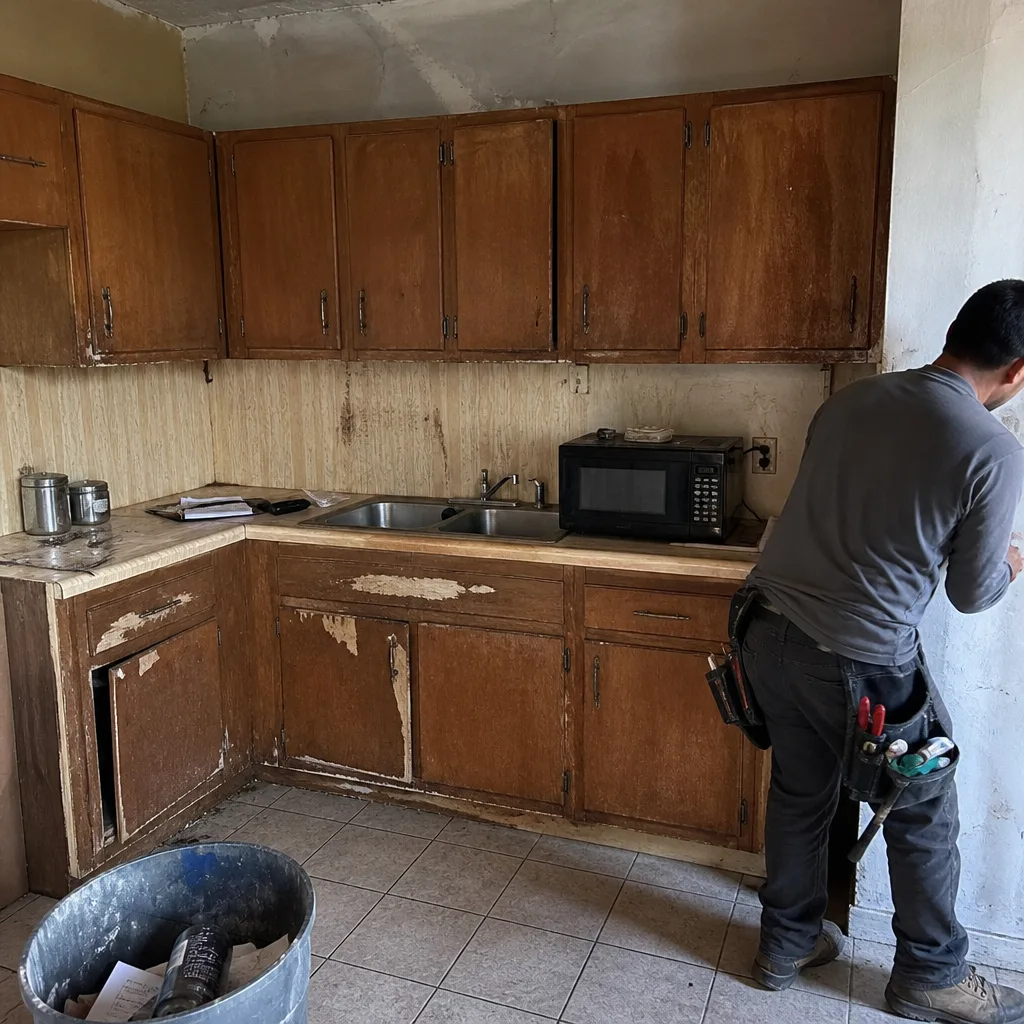 Before
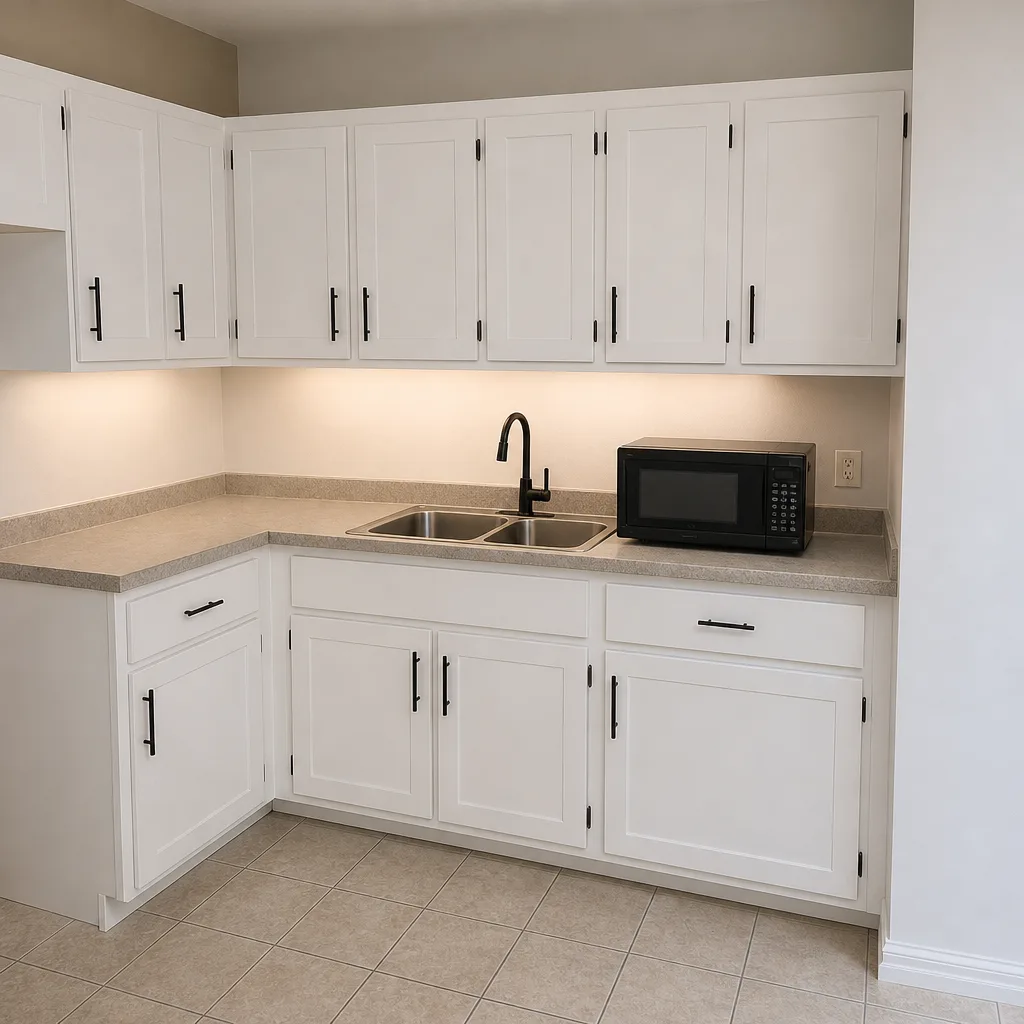 After
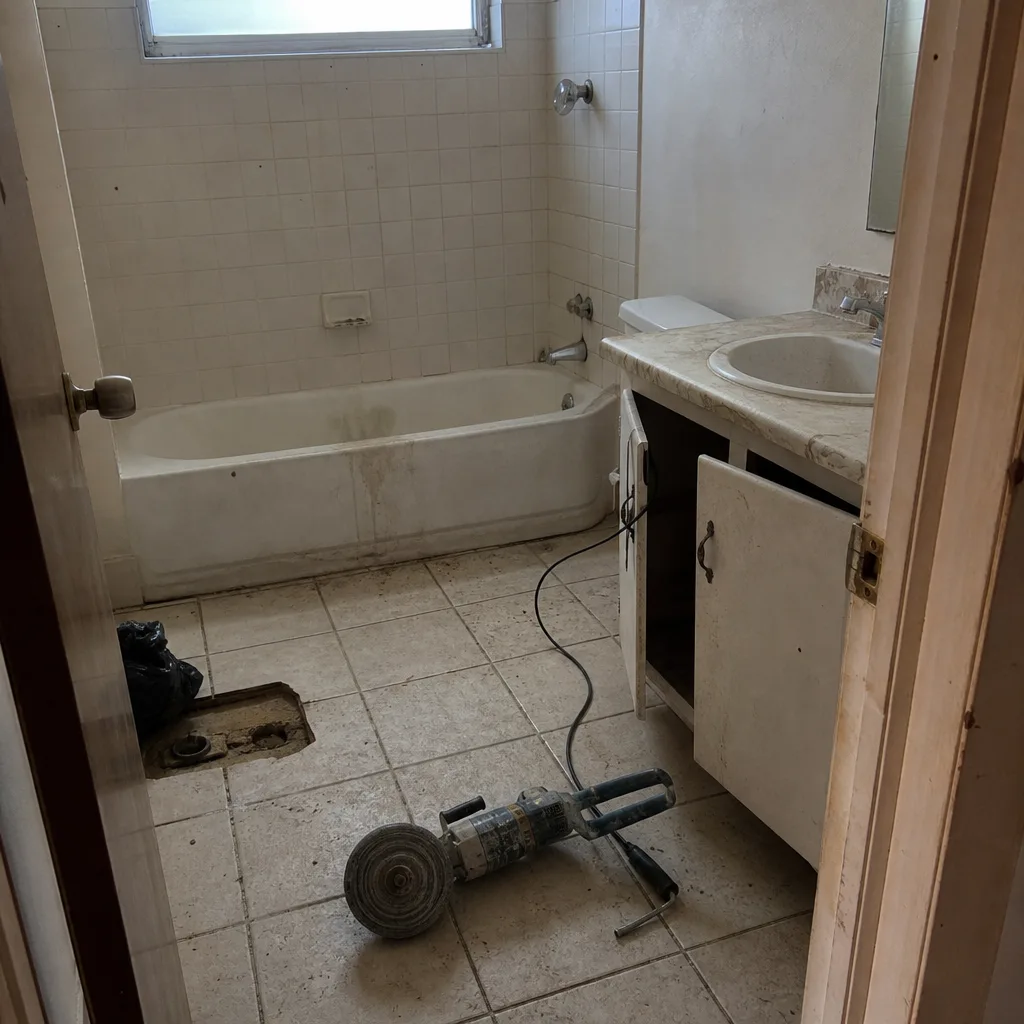 Before
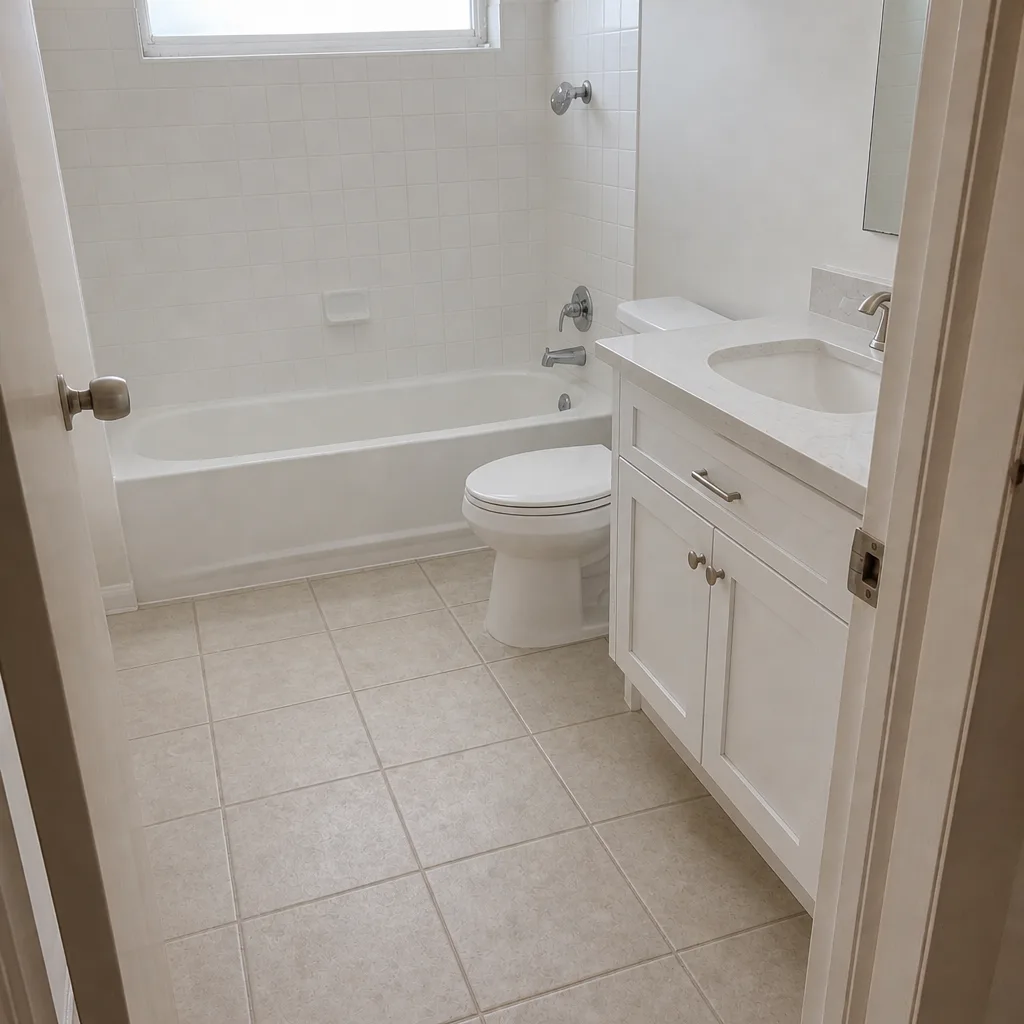 After
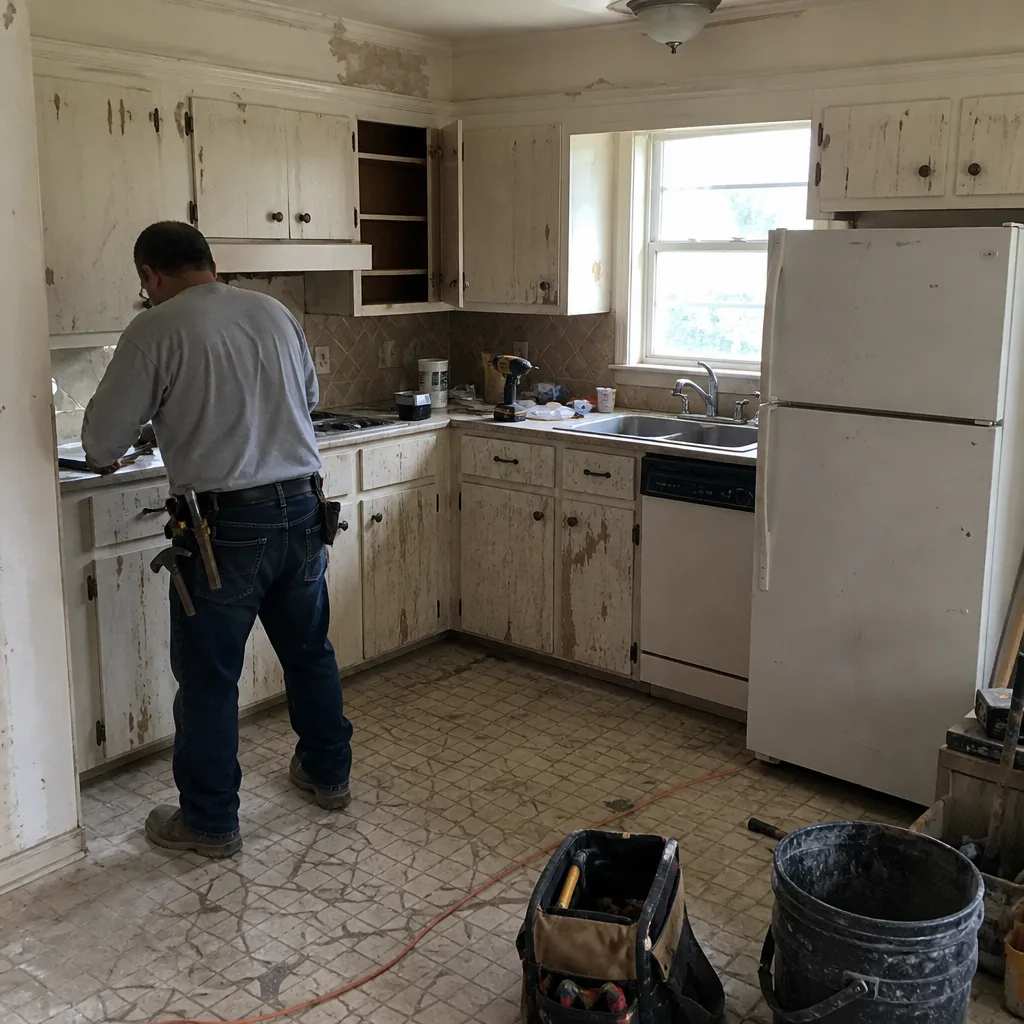 Before
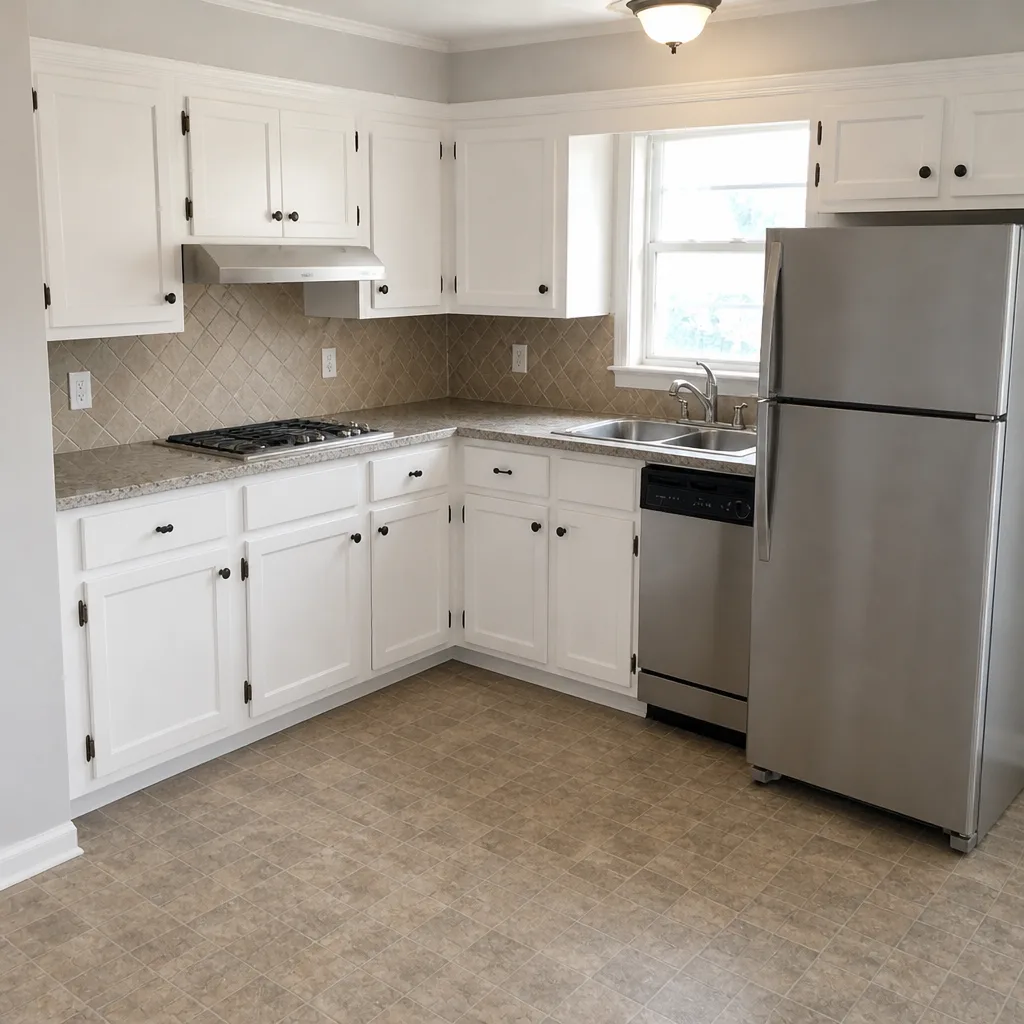 After
When to Call a Professional
Call a licensed structural engineer when you find a diagonal crack at an opening corner that’s wider than 1/8 inch, when any crack has visibly widened since your last check, or when you can see or feel air moving through a crack. Call a licensed roofer when you’ve found three or more attic warning signs after a wind season – backed-out nails, rust rings, or daylight between sheathing panels. Call us when it’s time to get the actual price. Rowan Construction Group Hialeah offers free estimates in Hialeah – call (888) 836-5914. The written price comes before any work starts, every time. That’s the whole point of the Haven Standard.
Frequently Asked Questions
Direction and width. Vertical and horizontal cracks under 1/16 inch in a CBS home are usually stucco shrinkage and worth watching, not panicking over. A diagonal crack running from the corner of a door or window opening, or any crack wider than 1/8 inch, is the one that warrants a licensed structural engineer’s review. Use a $12 crack comparator card to check width instead of guessing. Call (888) 836-5914 if you want a written assessment before you spend money on cosmetic repair.
Get the permit number and the inspection sign-off from the city building department. If it’s a purchase, check the seller’s disclosures and the title search at the same time. Physically, check for mismatched paint or stucco texture, a new stucco layer applied over an old one, and cracks that re-opened in the same location. A missing permit record usually means the repair wasn’t inspected. For a free second opinion on what a proposed repair actually involves, call (888) 836-5914.
Yes, especially in Hialeah’s flat topography where water doesn’t run off on its own. Standing water within 6 inches of a block foundation puts hydrostatic pressure against the porous block and pushes moisture into the wall. The outward signs are efflorescence and paint peeling low on an interior wall. The fix is usually grading, fill soil, and downspout extensions – get it corrected before the interior has to be repaired. Call (888) 836-5914 for a free estimate on the grading work.
Rust rings around nail heads on the roof sheathing, nails that have backed out even a fraction of an inch, daylight visible between sheathing panels, and any soft spot or sag between trusses. These are visible from inside the attic with a flashlight – no roof-walking needed. Three or more of these signs warrant a licensed roofer’s inspection before the next storm season.
Don’t. An unsigned change order is an unknown cost attached to your project. A legitimate change is written out with the scope and the price difference, and it gets signed before the work proceeds. That’s the discipline behind our projects finishing within a few percent of the agreed price across 4,000-plus jobs. If a contractor won’t put a change in writing, get the price in writing elsewhere before you continue – call (888) 836-5914 for a free second opinion on any written estimate.
How much does it cost to fix a structural crack in a Hialeah home?
It depends on the scope, which is why the answer is a written price and not a range. A cosmetic stucco repair is a small job; an engineering review plus structural repair plus re-stucco is a larger one. The only honest answer is a written scope and flat price before anyone starts, and that’s what we quote. Call (888) 836-5914 to schedule a free estimate and get a real number.
The Bottom Line
The visible warnings are the ones that cost the least. In Hialeah, the expensive failures are the ones that don’t look like damage yet: a diagonal crack at a door corner that reads like settling but isn’t, nail heads in the attic after a wind season, water sitting against a block foundation because the yard is flat, and undocumented repairs hiding under a tidy patch. Every one of these is cheaper to diagnose than to fix later. Take the photos, check the diary of your contractor relationship for missing signatures and missing permits, and get a written price before you spend money on repairs.
Rowan Construction Group Hialeah offers free estimates across seven trades, including roofing, windows and doors, pavers, fence installation, kitchen and bath remodeling, and home additions. Every quote is a flat price with a written scope and a written warranty. No change gets started without a signed change order. Backed by the 365-Day Done Right Promise. Call (888) 836-5914 to schedule your free estimate.
For a full picture of the services behind this guide, visit our Rowan Construction Group Hialeah home page, and explore Driveway & Pavers in Hialeah, Fence Installation in Hialeah, and Home Additions & ADU in Hialeah when the next step is changes to the footprint or the yard.
Written by the team at Rowan Construction Group Hialeah.