Last updated November 17, 2026







Free written scope consultation - allowances, timeline, and change-order rules on paper before a single trade is scheduled
Bathroom Remodeling Troubleshooting: Common Problems and How to Fix Them
Two grout lines show mold. One wipes clean. The other keeps coming back. The difference between them is roughly $200 and $4,000, and they look nearly identical to a homeowner standing in the shower. After enough Hialeah remodels, you start to see the same three failures repeat: mold hiding behind improperly waterproofed tile, galvanic corrosion on mixed-metal supply lines fed by hard water, and caulk joints that read as cosmetic but signal a waterproofing breach. This guide gives you the diagnostic tests contractors run before recommending a tear-out, the timelines hard water follows on your fixtures, and the fixes that actually hold. Read it before you sign anything.
Quick Answer
Most bathroom remodeling “problems” trace to one of three causes: water getting behind the tile, water chemistry eating the plumbing, or caulk and grout installed in the wrong place or the wrong material. Diagnose which one you have before spending money. A surface mold cleaning costs under $200; a tile tear-out to fix a breached waterproofing membrane in Hialeah routinely runs $3,500 to $6,000. The probe test, smell test, and tile-tap test below tell you which problem you’re facing in about five minutes.
Styles & brands we work with
- Kitchen remodeling
- Bathroom remodeling
- Home additions & ADU
- Roofing
- Windows & doors
- Driveway & pavers
- Fence
Table of Contents
- Tile and Grout Mold: Surface Problem or Substrate Problem?
- How Hialeah’s Hard Water Ages Your Fixtures
- Caulk vs. Grout at Corners: Why It Always Cracks
- Low Water Pressure After a Remodel
- When Your Exhaust Fan Is Undersized or Misrouted
- How to Spot a Contractor Who Gets Waterproofing Wrong
- Common Mistakes to Avoid
- Frequently Asked Questions
Tile and Grout Mold: Surface Problem or Substrate Problem?
This is the call that decides the next several thousand dollars. Mold that grows on the face of grout and wipes off is a hygiene and ventilation problem. Mold that recurs at the base of the tile, where the tile meets the tub or the floor, or grows along a single grout line in a straight pattern, almost always means water is traveling behind the tile. In a Hialeah bathroom, the humidity alone can support surface mold growth, so mold’s presence isn’t the diagnostic. Its location and its return rate are.
Contractors use three quick tests before recommending anything. You can run all three yourself:
- The probe test. Press a dry paper towel firmly against the suspect grout line and hold for ten seconds. A towel that comes away damp from a joint that hasn’t been splashed means moisture is wicking from behind the tile, not sitting on top of it.
- The smell test. A musty, wet-earth smell in a bathroom that ventilates well points to trapped moisture in the wall cavity. Surface mold smells mild; substrate mold smells like a basement.
- The tile-tap test. Tap the tile over the problem area with a plastic-handled screwdriver. A hollow, dull sound (compared to the sharp click of a soundly bonded tile) means the thinset has detached from the substrate. That’s a waterproofing failure under the tile, and cleaning won’t fix it.
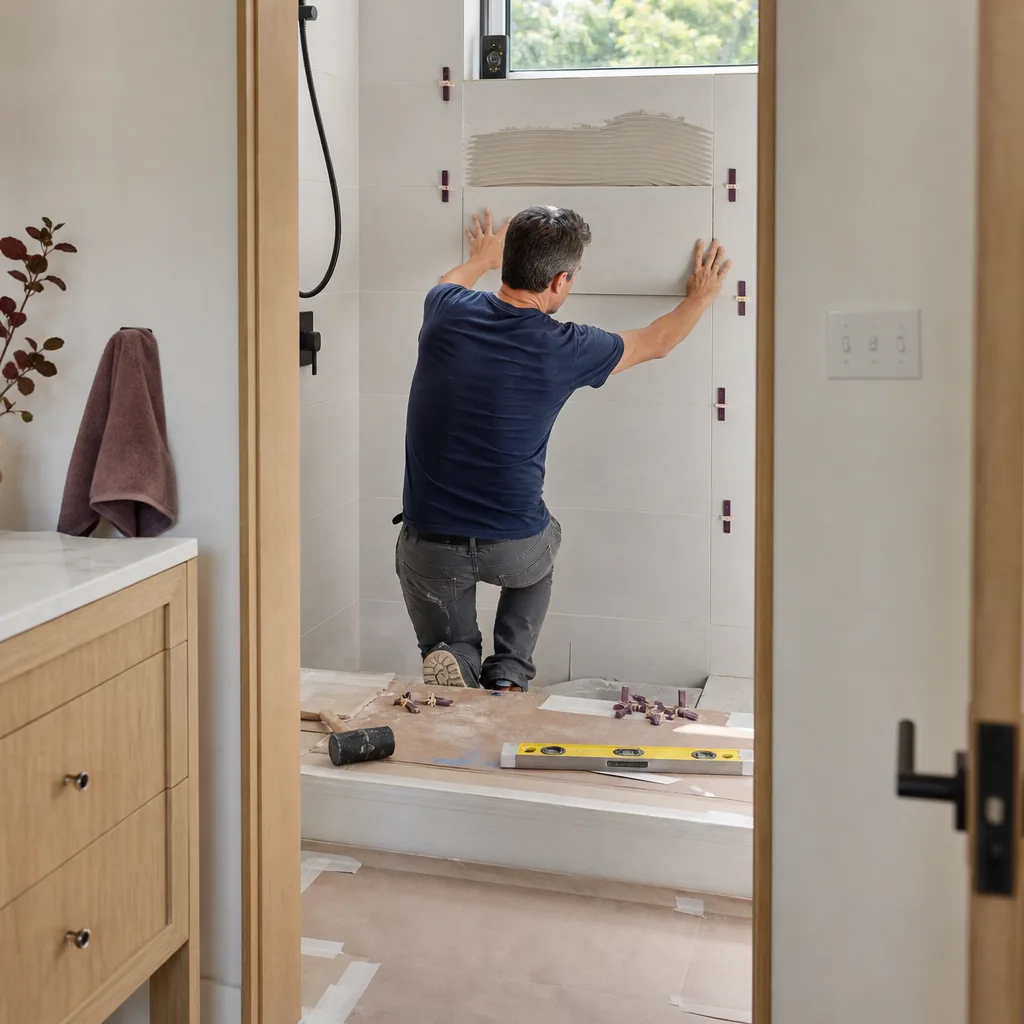
If any two tests point to substrate moisture, stop cleaning and start budgeting for an inspection. The wall has to be opened to confirm. We’ve opened walls in Hialeah where the waterproofing was a single coat of paint-on membrane over drywall, with no backer board behind the tile. That assembly fails within a few years of daily showers, and no surface sealant rescues it. A proper rebuild uses cement backer board, a bonded sheet or liquid-applied waterproofing membrane, and a correctly sloped shower pan that sheds water toward the drain rather than trapping it at the seams. When that work is part of a larger renovation, our Rowan Construction Group Hialeah home page lays out how we document the substrate condition before the first tile comes off.
How Hialeah’s Hard Water Ages Your Fixtures
Miami-Dade municipal supply runs hard, averaging roughly 200 to 300 ppm of dissolved minerals. In practical terms, that means every fixture in your bathroom is slowly being lined with calcium and magnesium scale. The damage isn’t dramatic. It’s a schedule. Knowing the timeline lets you replace parts on your terms instead of discovering a seized valve mid-renovation.
- Aerators (roughly 1 to 2 years). Faucet aerator screens clog with scale first. A faucet that sprays sideways or loses flow is usually a $10 part, not a broken cartridge.
- Showerheads (2 to 3 years). Spray holes clog unevenly, so the pattern degrades before the flow does. A showerhead that feels “weaker” is often just scaled, not worn out.
- Cartridges and valve stems (4 to 7 years). Scale roughens the sealing surfaces inside a faucet cartridge, causing drips. This is the point where a rebuild kit or a cartridge replacement is the honest fix.
- Supply valves and shutoffs (10 to 15 years). The $8 angle stop under the sink is the part that fails during someone else’s remodel. A valve that won’t close all the way can’t be isolated, so the plumber has to shut the whole house. Replacing shutoff valves with quarter-turn ball valves is one of the cheapest risk reductions in any older bathroom.
Galvanic corrosion is the second half of the plumbing story. When a brass valve, a copper pipe, and a steel fitting connect directly, the hard-water minerals act as an electrolyte and the dissimilar metals eat each other at the joint. In Hialeah’s older housing stock, this shows up as scaling and pitting right at the connections. The fix is a dielectric union or a brass-to-brass connection, and it’s cheaper to specify during a remodel than to chase a pinhole leak after the drywall closes. Our technicians have up to 19 years of experience reading exactly these connections before a wall goes back up.
Caulk vs. Grout at Corners: Why It Always Cracks
Grout at a tub-to-wall joint will crack. Not might. Will. The tub flexes when someone steps in and the wall doesn’t, and that differential movement chews through rigid cement grout within a year or two. The same applies at every inside corner and every plane change, like where wall tile meets floor tile. Grout belongs on flat fields between tiles. Corners and changes of plane get sealant. The correct sealant is 100% silicone caulk rated for wet areas, not the acrylic “paintable” caulk sold next to the paint aisle.
Here’s how to tell a contractor got it wrong before you hire them, or after a job is done:
- Grout in the corners. If you can see a chalky, matte line running continuously around an inside corner, that’s grout. It’ll crack. On a well-built job, you’ll see a slightly glossier, rubbery bead instead.
- Acrylic caulk in a wet area. Acrylic caulk shrinks and peels when it stays wet. It belongs near trim and on dry joints, never at the inside of a shower or a tub surround.
- A bead laid over a wet or dusty joint. Silicone won’t bond to moisture or dust. A bead that peels off in one clean strip on the first pull was installed over a dirty surface, and the waterproofing behind it was likely treated the same way.
- No backer rod in a deep gap. Silicone needs material to bond to. A deep joint gets backer rod stuffed in first. Skipping it leaves the caulk bridging a void, which fails.
One more tell: a contractor who caulks over a failing joint without addressing why it failed is hiding the symptom. If water is already getting behind the sealant, a fresh bead just traps it. When we quote a bathroom in Hialeah, the scope states explicitly whether the joint gets recaulked or the assembly gets rebuilt, because those are different repairs with different prices.
Low Water Pressure After a Remodel
A bathroom that had good pressure before the remodel and weak pressure after has a specific, findable cause most of the time. Work through these in order, cheapest first, before assuming the plumbing is bad.
- Check the flow restrictor. New showerheads and faucets ship with flow restrictors, sometimes rated at 1.8 to 2.5 gallons per minute. A strong old fixture replaced by a compliant new one can feel dramatically weaker. This is normal, not a defect, and you can usually confirm the rating on the fixture box or spec sheet.
- Check the aerator screen. A new faucet that flows weakly in one direction is often just a debris-clogged aerator from construction dust. Unscrew it, rinse it, replace it. This is a homeowner fix.
- Check the shutoff valves. Undersized or partially-open angle stops starve the fixture. If a valve won’t open fully, it needs replacing.
- Check the pressure-reducing valve (PRV). Homes with high incoming pressure get a PRV, typically set around 50 to 60 psi. If someone adjusted it during the remodel, every fixture in the house drops. That’s a plumber’s job to measure and reset, and it usually needs a permit in Hialeah.
- Check for a partially closed main or a scale-blocked cartridge. If pressure dropped everywhere, not just in the bathroom, this is your likely culprit.
Here’s the line: aerator, showerhead, and visible valve checks are homeowner work. Anything involving the PRV, the main, or opening a wall to reach a supply line is a licensed plumber’s job, and in Hialeah a permit is usually required. Don’t let a remodel crew “just check it” if they aren’t licensed to touch the plumbing. Ask for the license number and put it on the quote.
When Your Exhaust Fan Is Undersized or Misrouted
Bathroom exhaust fans fail quietly. They keep humming, so they seem fine, while moisture builds in a way that shows up years later as peeling paint over the shower or a rusty mirror. Two signs reliably flag a problem: a mirror that takes more than about ten minutes to clear after a shower, and paint peeling or blistering above the shower. Both mean the fan isn’t moving enough air, or the duct is sending it to the wrong place.
The fix is two steps, and step two is the one people skip.
- Upgrade the fan. Size the fan to the room. The trade rule is roughly one cubic foot per minute (CFM) per square foot of bathroom floor area, with a bump for a dedicated shower stall. A Hialeah bathroom of 60 square feet wants at least a 60 CFM fan, and offering quiet operation at that rating usually means spending $120 to $250 on the unit itself.
- Inspect the duct route. A properly routed duct terminates at the roof or an exterior wall. What we find in Hialeah remodels far too often is ducting that dumps into the attic, or runs long and kinked with a crushed flex duct. Moist air vented into an attic condenses on the wood and grows mold up there, where nobody looks. The duct needs to be smooth, insulated, short, and terminating outdoors with a proper vent hood and damper.
If the paint is already peeling above the shower, address the source before repainting. Paint over a moisture problem returns within a season. Catching this during a larger renovation is why we inspect the exhaust path as a standard part of a bathroom scope, and the photo record from the visit shows you the duct route, not just the new fan.
How to Spot a Contractor Who Gets Waterproofing Wrong
Waterproofing is the part of a bathroom remodel you can’t see, which is exactly why it’s worth screening for before the job starts. A few questions cut through the sales talk. We ask them of our own crews on every Hialeah project, and you can ask any contractor the same way.
- “What’s the waterproofing assembly?” A real answer names it: cement backer board plus a bonded sheet membrane or a liquid-applied membrane, with a sloped shower pan and a curb built to shed water. A vague answer (“we tile over it, it’s fine”) is a warning.
- “Where does the shower pan slope?” Toward the drain, with a pre-slope under the pan liner. If the liner sits flat on the subfloor, water pools.
- “Do you use a flood test on the pan?” A proper shower pan is filled with water and left for 24 hours before tile goes on. If they don’t do this step, they don’t do a proper pan.
- “What sealant at corners and changes of plane?” 100% silicone. Not grout, not acrylic.
- “What’s the written price and scope, and do changes get signed?” Your quote should name the assembly, the fixtures, and the warranty in writing before any work starts. Under Clause 1 of the Haven Standard, the price is written before anyone starts, and no change proceeds without a signed change order. That single discipline keeps projects within a few percent of the agreed number.
If the remodel includes converting a room or building out square footage, the waterproofing question carries into the larger structure. Our Home Additions & ADU in Hialeah page covers how we sequence trades and pull inspections so a new wet area is built right the first time. For exterior work around the home that ties into drainage, Fence Installation in Hialeah and Driveway & Pavers in Hialeah show the same documentation habit applied to the outside of the house.
Common Mistakes to Avoid
- Cleaning recurring mold over a failed membrane. If mold keeps returning to the same grout line, the wall needs to be opened and inspected. Repeat cleaning buys time and hides the real repair. In Hialeah’s humidity, trapped moisture behind tile won’t dry out on its own.
- Grouting the corners. Grout at any inside corner or plane change will crack. Use 100% silicone rated for wet areas, and insist on it in writing.
- Choosing fixtures only on the showroom look. A faucet’s finish and aerator design determine how fast it scales in hard water. Ask for a model with a replaceable cartridge and a standard aerator you can clean or swap.
- Skipping the exhaust duct inspection. A new fan connected to a crushed or attic-dumping duct does nothing. Pay for the two-step fix, not just the fan.
- Letting an unlicensed handyman touch the plumbing. PRVs, main shutoffs, and supply lines need a licensed plumber and usually a permit in Hialeah. Ask for the license number and get it on the quote.
- Accepting a verbal price. A number you can’t put side by side with another quote is not a price. Insist on a written, flat price with a written scope and warranty before work starts.
- Ignoring the shutoff valves. Replacing old angle stops with quarter-turn ball valves during the remodel costs little and prevents a leak-driven emergency later.
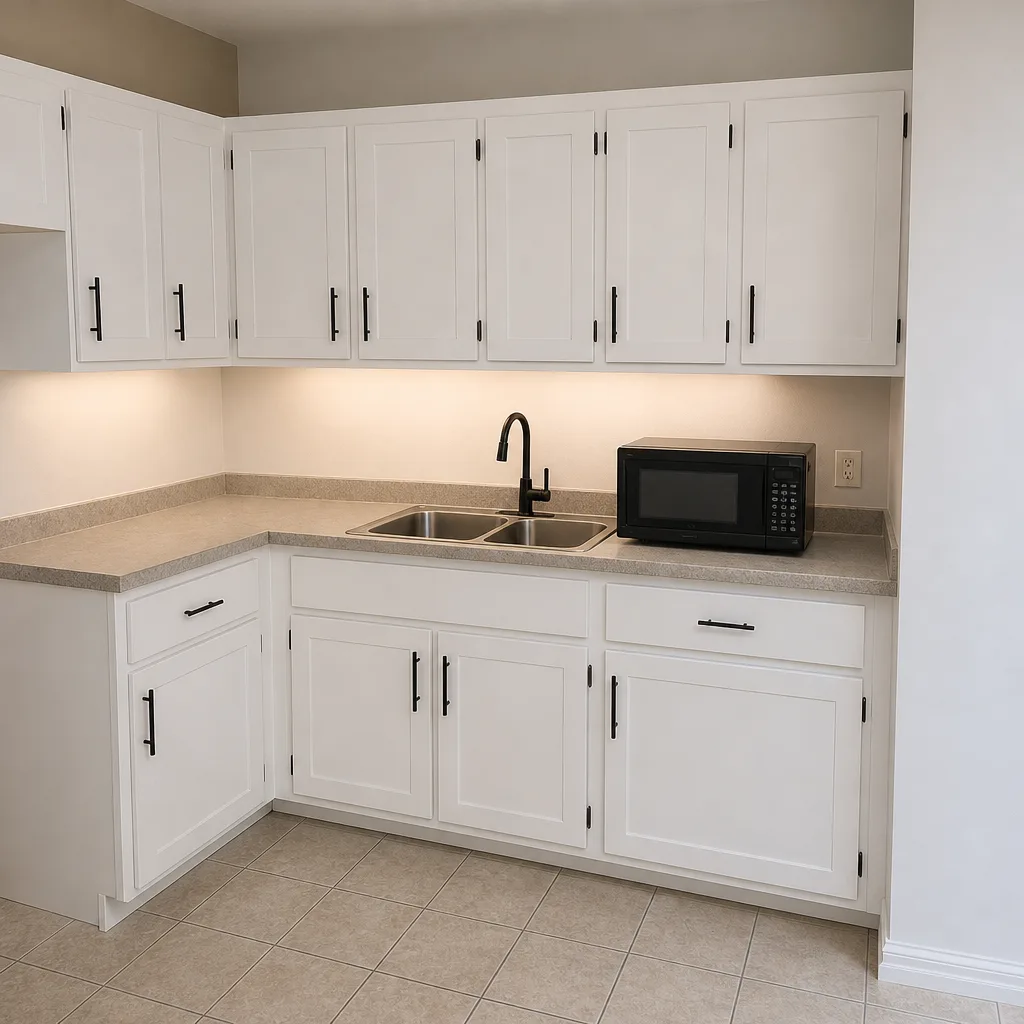
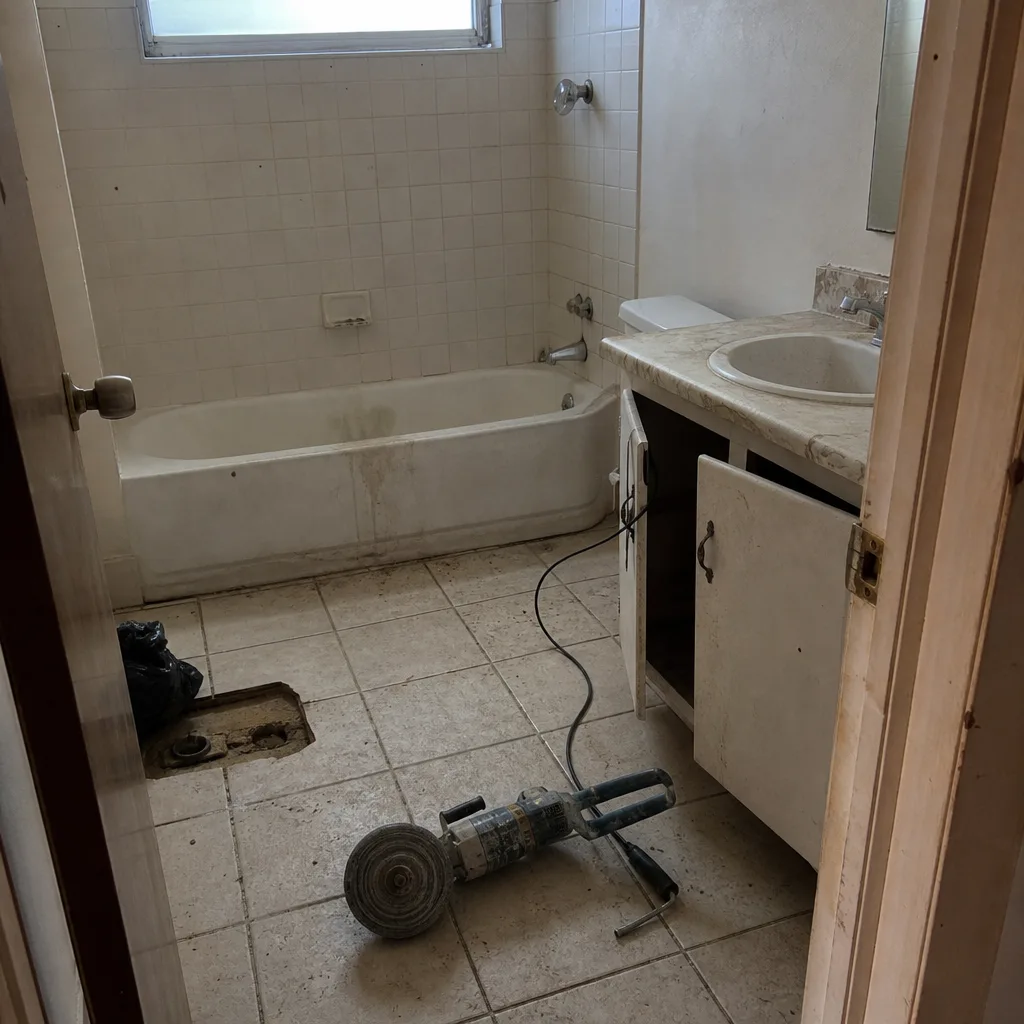
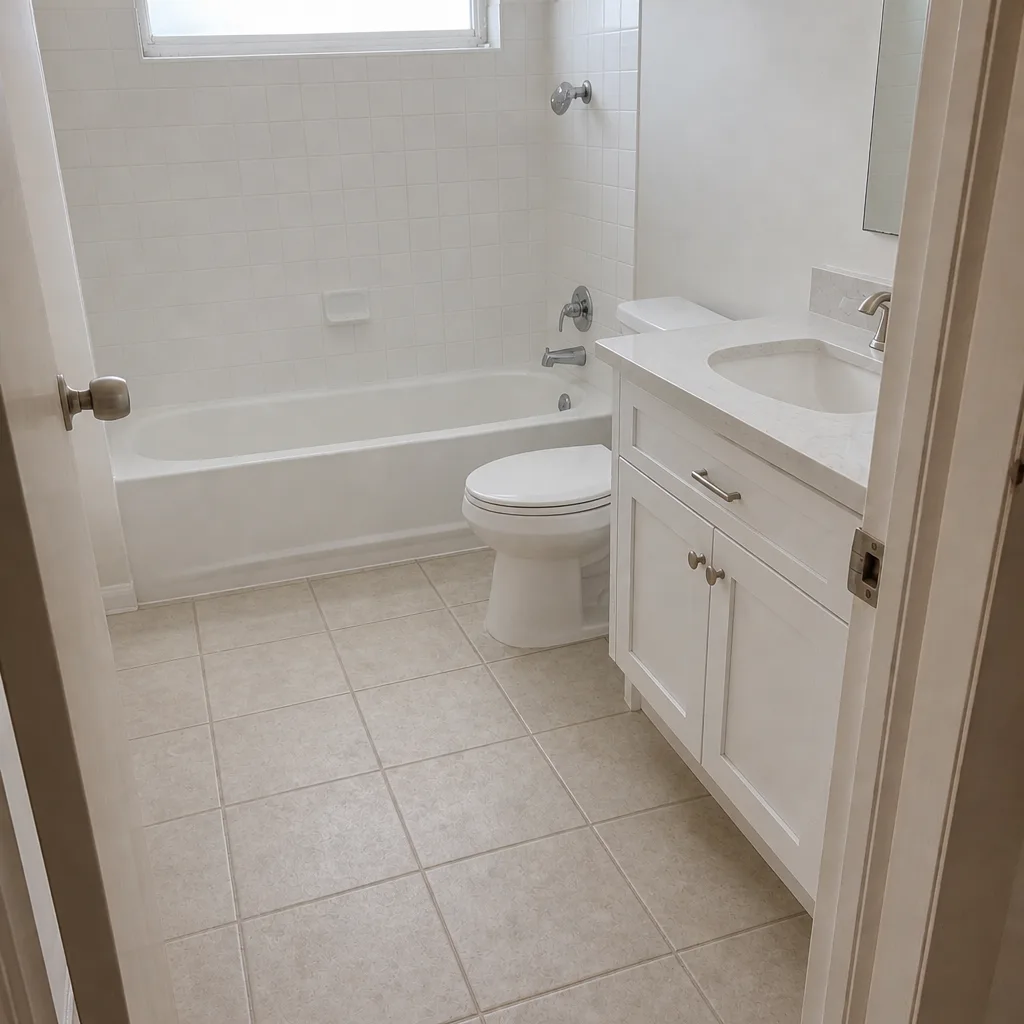
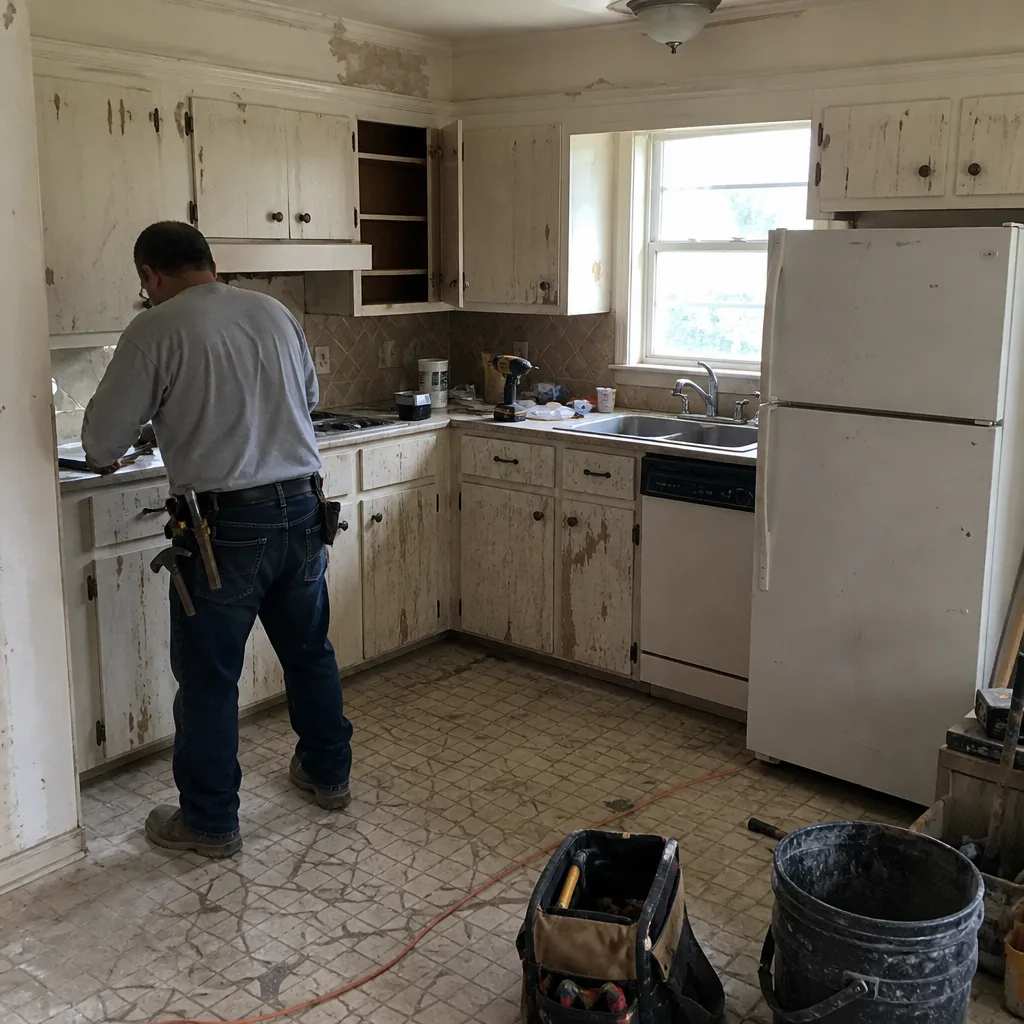
See the difference
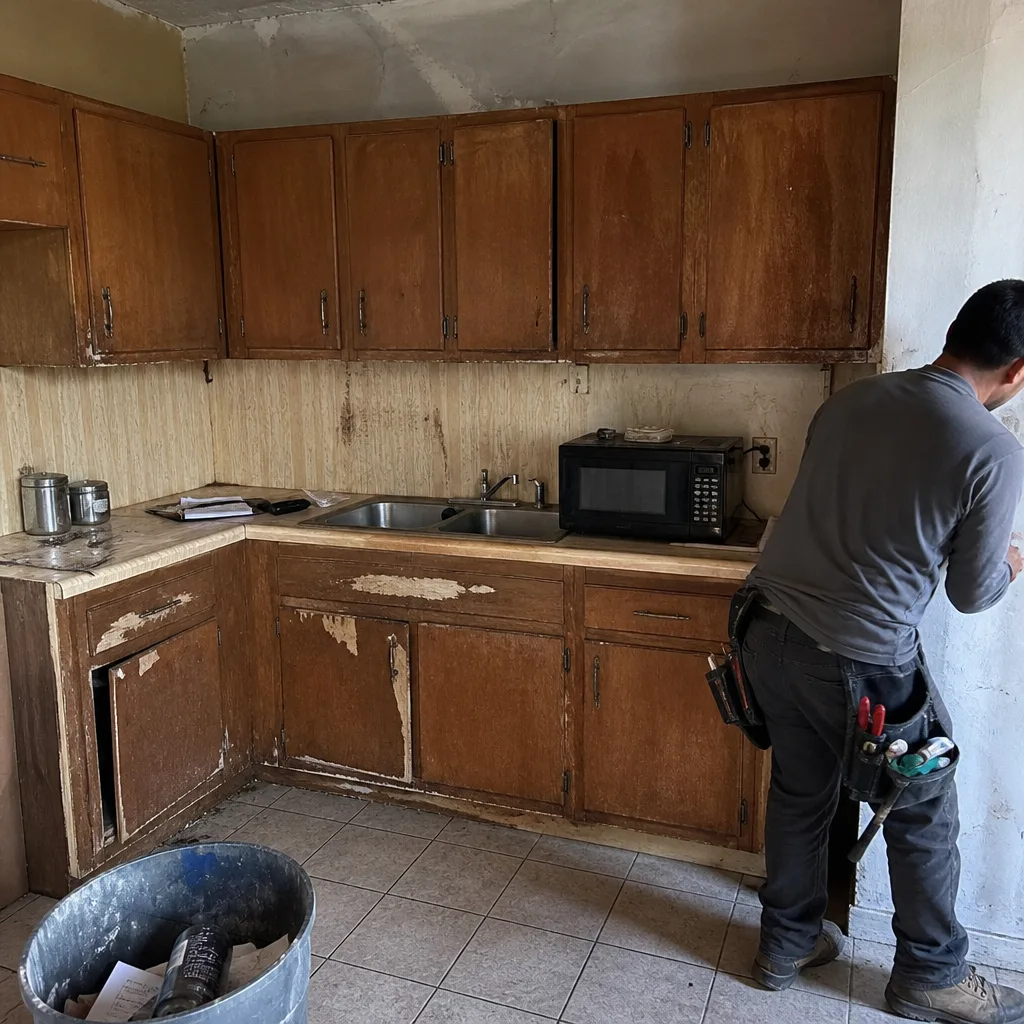 Before
 After
 Before
 After
 Before
 After
When to Call a Professional
Call a professional the moment you find substrate mold, a hollow tile over a wet area, or a shower pan that holds water instead of draining. Also call if pressure dropped everywhere after a remodel, if a shutoff valve won’t fully close, or if you smell musty air that a new fan doesn’t clear. Those are signs the waterproofing or the supply plumbing needs licensed hands and, in Hialeah, usually a permit. Don’t open a wall or reset a PRV yourself. For anything that’s clearly cosmetic, caulk and grout work you can often handle. Rowan Construction Group Hialeah offers free estimates in Hialeah, and a written price before any work starts. Call (888) 836-5914 to schedule yours.
Frequently Asked Questions
Run the probe, smell, and tile-tap tests. Damp paper towel from an unsplashed grout line, a musty smell, and a hollow tap sound together mean moisture is behind the tile and the wall needs inspection. If mold wipes off and stays gone, it was surface mold and cleaning plus better ventilation is the fix. Call (888) 836-5914 for a free estimate if the tests point to a substrate problem.
Either the fan is undersized for the room or its duct is routed wrong. A fan sized at roughly one CFM per square foot, venting through smooth duct to the outdoors, clears a mirror well under ten minutes. A fan dumping into the attic or running through crushed flex duct won’t, no matter how loud it runs. The fix is a new fan plus a duct inspection, and we put both in the written scope.
Caulk shouldn’t crack if it’s 100% silicone in a corner. What cracks is grout at that joint, because the tub flexes and the wall doesn’t. If you have cracking at a tub-to-wall joint, the joint was grouted when it should have been caulked with silicone. That’s a warranty issue to raise with the installer and a write-in requirement for the next quote.
Check the flow restrictor on new fixtures, then the aerator screen, then the shutoff valves. If pressure dropped throughout the whole house, the pressure-reducing valve or the main is the likely cause, and that’s a licensed plumber’s job with a permit in Hialeah. Call (888) 836-5914 if you’re not sure which end it’s on, and we’ll tell you before you spend money.
Yes, moving or replacing supply and drain lines, installing a new shower valve, or resetting a pressure-reducing valve generally requires a permit and a licensed plumber in Hialeah. Cosmetic tile, caulk, and fixture swaps usually don’t. Ask your contractor which parts of the scope need a permit and get it written down.
A surface mold treatment runs under $200. Rebuilding a section of tile wall with correct waterproofing typically runs $1,500 to $3,500 for a partial shower wall, and a full shower rebuild runs $3,500 to $6,000. Get a written scope that names the waterproofing assembly, not just the tile. Call (888) 836-5914 for a free estimate and a second look at any competitor’s quote.
The Bottom Line
Most bathroom remodel headaches in Hialeah trace to water getting somewhere it shouldn’t: behind the tile, past a cracked joint, or out a misrouted exhaust duct. Diagnose before you spend. Run the probe, smell, and tap tests on mold. Know your hard-water timeline so you replace aerators, cartridges, and valves on your schedule. Use silicone at every corner and plane change. Size the fan to the room and inspect the duct. And insist on a written price with a written scope before anyone lifts a tool. That is the whole method, and it’s why a project finishes within a few percent of the number you agreed to.
Rowan Construction Group Hialeah works under The Haven Standard: a written price before any work starts, a signed change order for every change, background-checked technicians, a documented photo record on every visit, and the 365-Day Done Right Promise if something isn’t done right. Call (888) 836-5914 for a free estimate, and bring a competitor’s written quote if you have one. We’ll review it line by line at no charge.
Written by the team at Rowan Construction Group Hialeah.