Last updated November 17, 2026



Free written scope consultation - allowances, timeline, and change-order rules on paper before a single trade is scheduled
Bathroom Remodeling Warning Signs Every Homeowner Should Know
A soft spot in a bathroom floor that flexes under foot pressure is not a subfloor inconvenience – it is typically 60-90 days from complete subfloor failure and an average $2,200-$4,800 structural repair that doubles the remodel estimate. Most Hialeah homeowners discover a bathroom remodel is overdue after a failure, not before it: a leak staining the ceiling below, a mold disclosure during a home sale, a tile that finally cracks through. The eight conditions in this guide all appear 6-18 months before that failure. Learn to read them and the remodel happens on a planned budget, quoted in writing, rather than on an emergency one. Hialeah’s 1950s-1970s housing stock has its own set of tells, and this guide covers those too.
Quick Answer
The core warning signs of an overdue bathroom remodel are: a floor that flexes or tiles that move under foot, grout lines that have turned brown or black, a shower pan that stays damp or shows efflorescence (white mineral bloom) on the outside, musty smells that return within days of cleaning, and water staining on ceilings below the bathroom. In Hialeah, add galvanized supply lines past their service life, cast iron drain stacks with visible rust scale, and terrazzo that was tiled over without a proper substrate. Any two of these together means it’s time for a written estimate, not another tube of caulk.
Styles & brands we work with
- Kitchen remodeling
- Bathroom remodeling
- Home additions & ADU
- Roofing
- Windows & doors
- Driveway & pavers
- Fence
Table of Contents
- 1. The Floor Deflection Test: Measuring Subfloor Failure Without Tools
- 2. Grout Color Change: The Cheapest Diagnostic Tool You Own
- 3. What a Failing Shower Pan Looks Like From the Outside
- 4. Surface Mold vs. Cavity Mold: How to Tell the Difference
- 5. Hialeah-Specific Warning Signs: Galvanized, Cast Iron, and Terrazzo
- 6. Efflorescence and What It Tells You About Water Migration
- 7. The Real Cost of Waiting: Planned Budget vs. Emergency Budget
1. The Floor Deflection Test: Measuring Subfloor Failure Without Tools
Floor deflection is the amount a floor moves vertically under load. In a healthy bathroom, tile over a proper substrate moves less than 1/16 of an inch under normal foot traffic – you can’t feel it. In a bathroom with a compromised subfloor, you can feel it, and that’s the diagnostic threshold: if you can feel the movement through your shoe, the subfloor has lost structural integrity.
Here’s the test. Stand on a tile in the center of the bathroom floor and shift your weight from heel to toe slowly. Then walk the perimeter, near the tub and toilet, where water damage concentrates. What you’re feeling for is a distinct “give” or bounce, not the normal micro-flex of any floor. If you can see a gap open at a grout line while you shift your weight, or if a tile rocks slightly under a bare foot, that’s deflection you can measure with your eyes.
Two kinds of flex matter:
- Normal flex – a floor that’s slightly springy but returns to position and shows no grout cracking. Common in older wood-framed floors. Not urgent, worth inspecting.
- Saturation flex – a floor that gives more in one spot than another, accompanied by cracked or missing grout, a musty smell, or a soft spot near the toilet flange. This usually means the subfloor (typically 5/8-inch plywood or OSB) has absorbed water and begun to delaminate, and it’s on a timeline toward failure.
In our experience across Hialeah, toilet-flange leaks in 1960s homes are the single most common driver of saturation flex – the wax ring fails slowly, water wicks into the plywood, and the subfloor rots from the flange outward. If you feel deflection within 18 inches of the toilet, get a written estimate before that floor gives. If you’re weighing a bathroom project against other work, our guide to Home Additions & ADU in Hialeah covers how structural repairs affect the sequencing of larger projects.
2. Grout Color Change: The Cheapest Diagnostic Tool You Own
Grout that’s turned brown or black is not a cleaning problem – it’s a moisture map. Cementitious grout is porous; when water migrates beneath the tile, it wicks up through the grout and carries minerals and organic matter with it. The color change is the visible end of a water-migration timeline that usually starts 6-12 months before the grout fails entirely.
How to read it:
- Uniform gray-brown across the whole floor – usually traffic soil. Clean it once. If the color returns within 30 days, it’s water.
- Dark lines concentrated around the shower, tub, or toilet – water migrating from a wet zone. This pattern almost always points to a failing pan liner or a failed seal at the fixture connection.
- Black lines with a musty smell – biological growth feeding on moisture in the grout and the thin-set behind it. The mold is the symptom; the leak is the cause.
- White, powdery lines – efflorescence, covered in section 6. That’s mineral salt, and it means water is actively moving through.
We’ve found that grout color change appears on average 6-10 months before tile starts to pop loose. That’s the window to act. A bathroom in a Hialeah home built before 1980 with dark grout lines around the shower pan and no ceiling staining yet is a planned remodel. Wait until the ceiling below is stained and it’s an emergency. Our Rowan Construction Group Hialeah home page lays out the trades and the documentation standard we bring to every project.
3. What a Failing Shower Pan Looks Like From the Outside
The shower pan – the waterproof base layer beneath the tile, typically a PVC or CPE liner in a mortar bed – fails years before you see water on the ceiling below. The outside tells are consistent and readable if you know what to look for.
Look for these, in order of how early they appear:
- A shower floor that stays damp more than a few hours after use. A functioning pan drains fully. A damp pan means water is pooling under the tile, not reaching the drain.
- A hollow sound when you tap the shower floor tile with a screwdriver handle. Hollow means the thin-set has debonded, usually from water intrusion underneath.
- Caulk at the shower base that fails repeatedly. You recaulk the perimeter seam and within weeks it peels again. That’s not bad caulk; it’s water pressure from behind.
- Efflorescence on the exterior wall of the shower enclosure, if the shower is on an exterior wall. White bloom on drywall or tile grout means water is moving through the pan and evaporating at the surface.
- Staining or softness on the ceiling below. This is the late sign, typically 3-9 months from the pan’s structural failure and possibly from a subfloor repair underneath the bath.
In Hialeah, the combination of high humidity and year-round shower use accelerates pan failure – a pan that would last 20 years in a drier climate can fail in 12-15 here, especially if the original liner was installed before modern flood-testing standards. Hialeah homes built in the 1970s and early 1980s are the most common source of pan failures we see.
4. Surface Mold vs. Cavity Mold: How to Tell the Difference
Surface mold is a cleaning problem. Cavity mold – mold growing inside a wall, behind tile, or under a subfloor – is a demolition problem, and it changes the scope and cost of a bathroom remodel substantially. The distinction matters because you can waste months cleaning the wrong thing.
Two tools separate them: a moisture meter and your eyes.
- Moisture meter reading. A pin-type moisture meter (about $40 at any hardware store) reads percent moisture in drywall, wood, and tile underlayment. Normal bathroom drywall reads 8-12%. Above 16% means active moisture. Above 20% in a wall cavity means you have a leak behind that wall, and surface cleaning won’t fix it.
- Visual indicators. Surface mold grows on the outward face of a wall and wipes off with bleach solution. Cavity mold shows as bubbling paint, a soft spot when you press on drywall, dark staining bleeding through at the baseboards, or a musty smell that returns within 48-72 hours of cleaning. If the smell returns that fast, the source is inside the wall.
In our experience, a Hialeah bathroom with recurring mold on the ceiling above the shower and a 20%-plus moisture-meter reading in the wall behind it is not a ventilation problem. It’s a shower pan or supply line leak that’s been running behind the tile for months. That’s a cavity mold situation, and it calls for a written scope with demolition line items before anyone starts. If you’re bringing in a contractor, use our Free Second Opinion offer – bring any written estimate and we’ll review it line by line at no charge. For exterior water problems tied to the same moisture issues, our Fence Installation in Hialeah guide covers perimeter drainage and yard grading.
5. Hialeah-Specific Warning Signs: Galvanized, Cast Iron, and Terrazzo
Hialeah’s housing stock – particularly the 1950s-1970s construction in neighborhoods like Hialeah Heights, Palm Springs, and the corridors near West 49th Street and Okeechobee Road – carries three warning signs that don’t appear in newer homes. They’re the ones most often missed in a routine bathroom inspection.
Galvanized supply lines
Galvanized steel plumbing was standard in Hialeah homes built before about 1975. Its service life is 40-50 years, and most of those lines are now past it. The interior of the pipe corrodes, water pressure drops, and eventually a pinhole leak opens in the wall behind the shower or under the vanity. Warning signs: low hot-water pressure at the bathroom sink, rusty water when you first turn on the tap, and a bathtub that fills slowly. If you have galvanized lines and any of those symptoms, plan the re-pipe into the bathroom remodel, not after it.
Cast iron drain stacks
Cast iron drain pipes in the same era of Hialeah homes rust from the inside, scale builds up, and the pipe eventually fails at a joint or a horizontal run under the floor. Warning sign: a slow drain in the tub or sink that no amount of snaking fixes, or rust-colored scale visible at the drain fitting. A failing cast iron stack under a bathroom floor is a $1,500-$4,000 repair on its own, and it’s cheaper to plan than to discover.
Terrazzo tiled over without a substrate
A lot of Hialeah bathrooms had original terrazzo floors that were tiled over in the 1980s and 1990s, often without a proper uncoupling membrane. The tile sits directly on the terrazzo, and the bond eventually fails as the terrazzo and the thin-set move at different rates. Warning sign: tiles that sound hollow when tapped, especially near the tub. A proper remodel removes the tile layer, assesses the terrazzo, and installs a membrane before new tile goes down.
If you’re planning exterior work on the same property, our guide to Driveway & Pavers in Hialeah covers how the older sub-base in Hialeah properties affects paver installs.
6. Efflorescence and What It Tells You About Water Migration
Efflorescence is the white, chalky mineral bloom that appears on the surface of masonry, concrete, tile grout, or drywall when water carries dissolved salts through a material and evaporates on the surface. It’s a diagnostic gold standard in a bathroom inspection because it only appears when water is actively moving.
What efflorescence readings mean in a bathroom:
- On the exterior of an exterior wall – usually a leak at a window, roofline, or shower pan on that wall. This is often the earliest visible sign of a failing shower pan.
- On interior drywall above or beside the shower – moisture migrating through the wall assembly from the shower side, or from a leaking supply line inside the wall.
- On grout lines – water wicking up through the tile substrate. Early sign that the tile installation is failing.
Efflorescence is not the same as mold. It’s a mineral deposit, and it means the water is moving outward, which is actually good – the water is finding a way out. But it means the source is still active. Clean efflorescence off and it returns within weeks: you have an active leak. Clean it off and it doesn’t return: the leak is historic and possibly repaired. In our experience across Hialeah, efflorescence on the exterior shower wall is the single most underrated early warning sign, and it usually appears 6-12 months before the pan fails.
7. The Real Cost of Waiting: Planned Budget vs. Emergency Budget
The cost difference between a planned bathroom remodel and an emergency one is not the tile or the fixtures – it’s the structural and remediation work that appears after failure. Here’s the line-item comparison we see most often across Hialeah projects.
- Planned bathroom remodel (full gut, mid-grade): $12,000-$22,000 total, including demolition, rough-in updates, waterproofing, tile, and fixtures.
- Planned re-pipe of galvanized supply lines: $3,500-$7,000, run during the remodel as a scoped line item.
- Planned cast iron drain stack replacement: $1,500-$4,000.
- Emergency subfloor repair (failure already occurred): $2,200-$4,800 on top of any remodel work.
- Emergency mold remediation (cavity mold found after failure): $1,500-$6,000, depending on square footage and severity.
- Emergency re-pipe after a pinhole failure in a wall: $2,500-$6,000, plus wall repair and repaint.
- Water damage to the ceiling below (drywall, insulation, paint): $800-$3,000.
The math is consistent: wait for failure and the planned $12,000-$22,000 remodel becomes a $20,000-$36,000 project with remediation, wall repair, and often a week of displaced living. Under Clause 1 of The Haven Standard, the price is written before anyone starts – but we can only write you a fixed price for the work we can see. Failures hide the extent of damage until demolition begins, and that’s when the emergency premium kicks in.
Our 365-Day Done Right Promise backs the same work in Hialeah: if it’s not done right, we make it right, printed on every page and backed by a terms page, not an asterisk. Bring a competitor’s written estimate and our Free Second Opinion reviews it line by line at no charge, so you can compare scope, not just price.
Common Mistakes to Avoid
- Treating a soft spot as a cleaning problem. A floor that flexes or a grout line that keeps darkening is a structural warning. Caulking over it hides the sign and lets the water keep moving. Get a moisture meter on the surrounding wall and floor before you make the call.
- Recaulking the shower repeatedly instead of investigating the pan. If the base perimeter fails within a few weeks of a fresh caulk job, the water is coming from behind. In our experience across Hialeah, three failed caulk jobs in a row on the same pan is the equivalent of a written confession.
- Planning a cosmetic tile-and-fixtures remodel on original galvanized plumbing. New tile over 50-year-old galvanized supply lines is a short-lived win. Plan the re-pipe into the project. Our Rowan Construction Group Hialeah home trades page covers how plumbing rough-in fits the sequence.
- Skipping the moisture meter because the visible mold wipes off. Surface mold returning within 72 hours of cleaning means there’s a cavity issue. A $40 pin-type moisture meter will tell you in 10 seconds whether it’s a cleaning job or a demolition job.
- Assuming terrazzo under tile is a stable substrate. Tile set directly on terrazzo without an uncoupling membrane is a bond failure waiting to happen, especially in Hialeah homes tiled in the 1980s. Tapping for hollow sounds catches it.
- Waiting for the ceiling below to stain before calling. By the time the ceiling below is stained, the failure has been active for weeks or months. The window to plan this as a bathroom remodel – rather than an emergency repair – is before that stain.
- Using an unlicensed handyman for structural or waterproofing work. Waterproofing a shower pan and repairing a subfloor are not appliance-install jobs. Every licensed contractor should show you the license number on the written estimate, and every visit should include a documented photo record of what was found and what was done.
See the difference
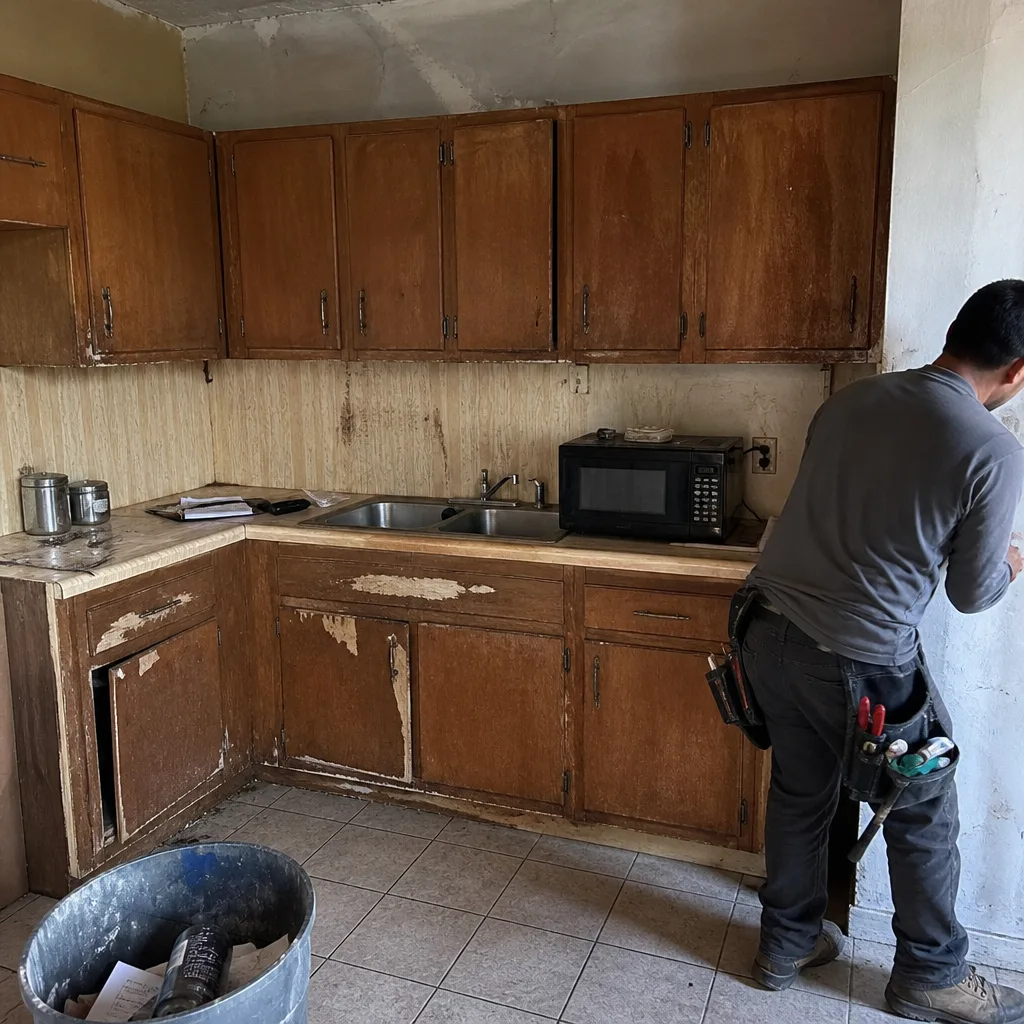 Before
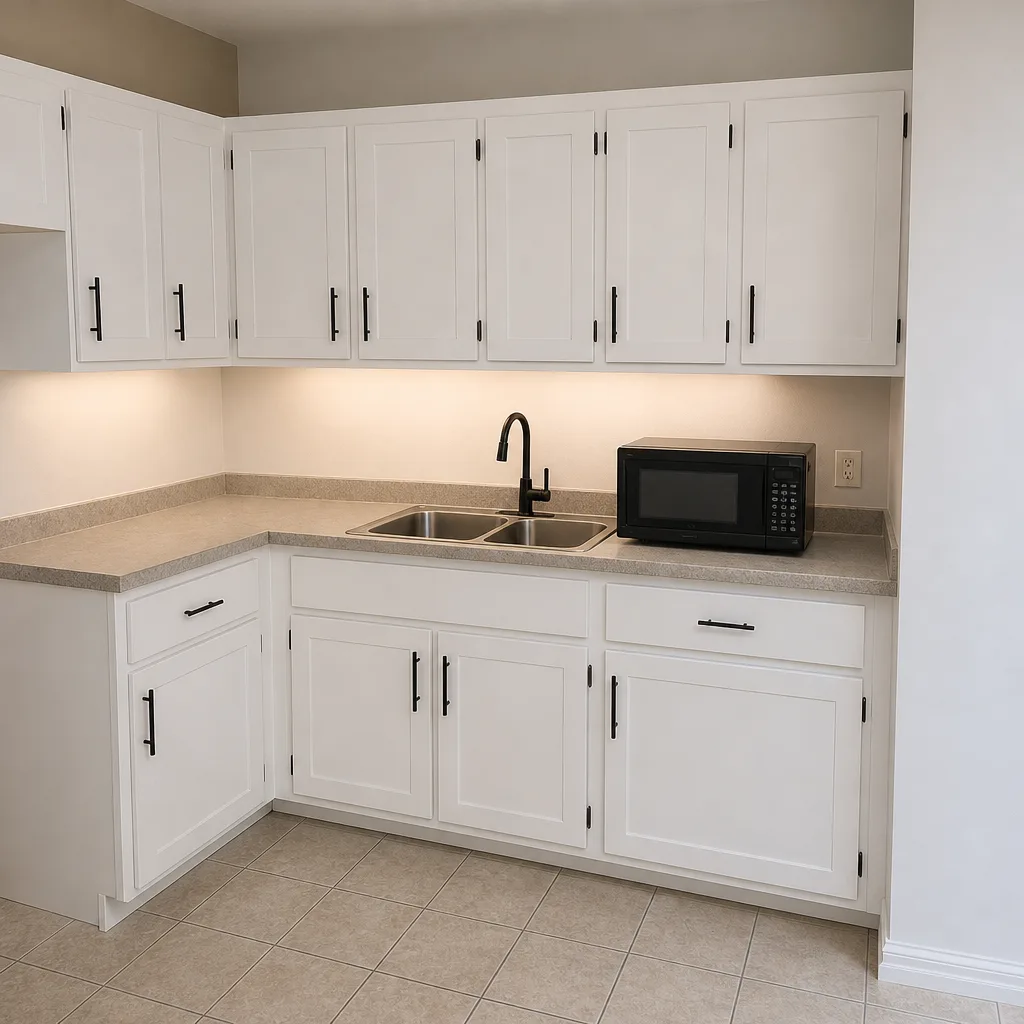 After
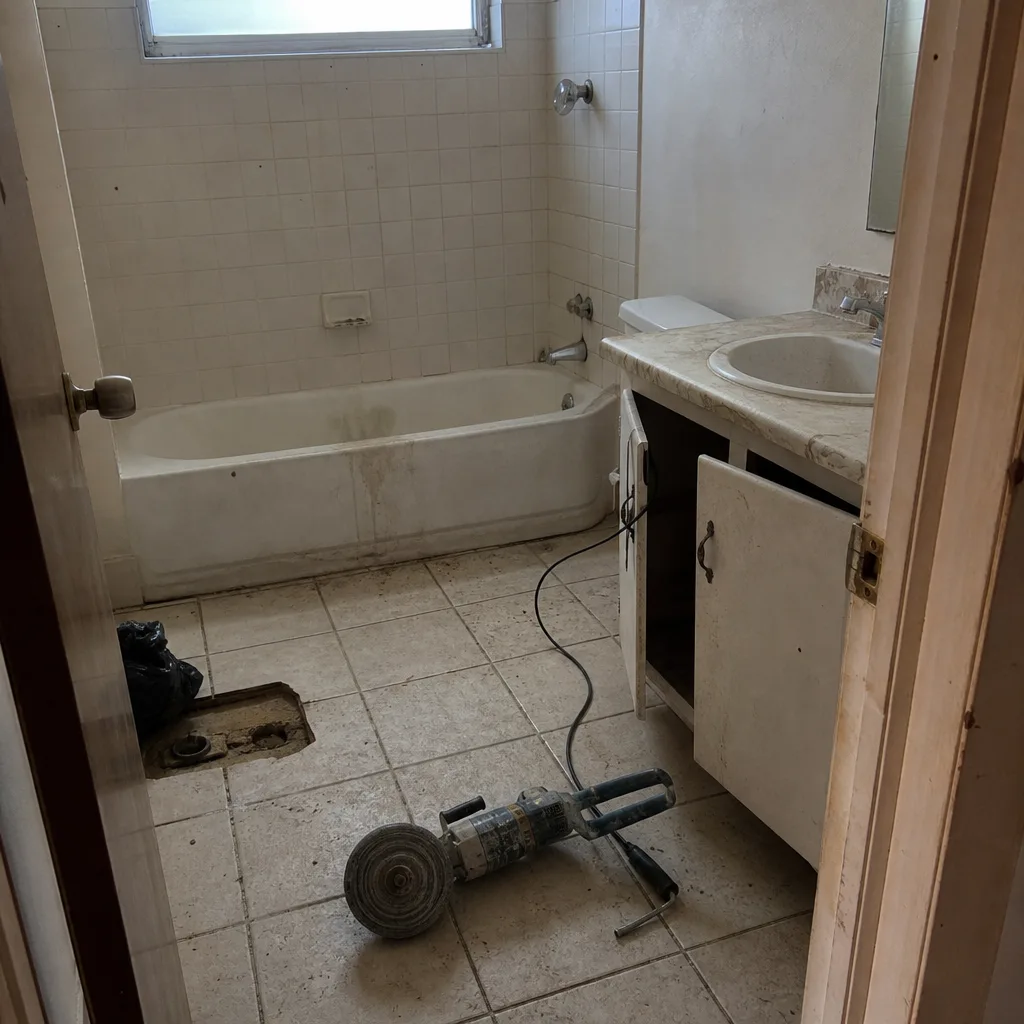 Before
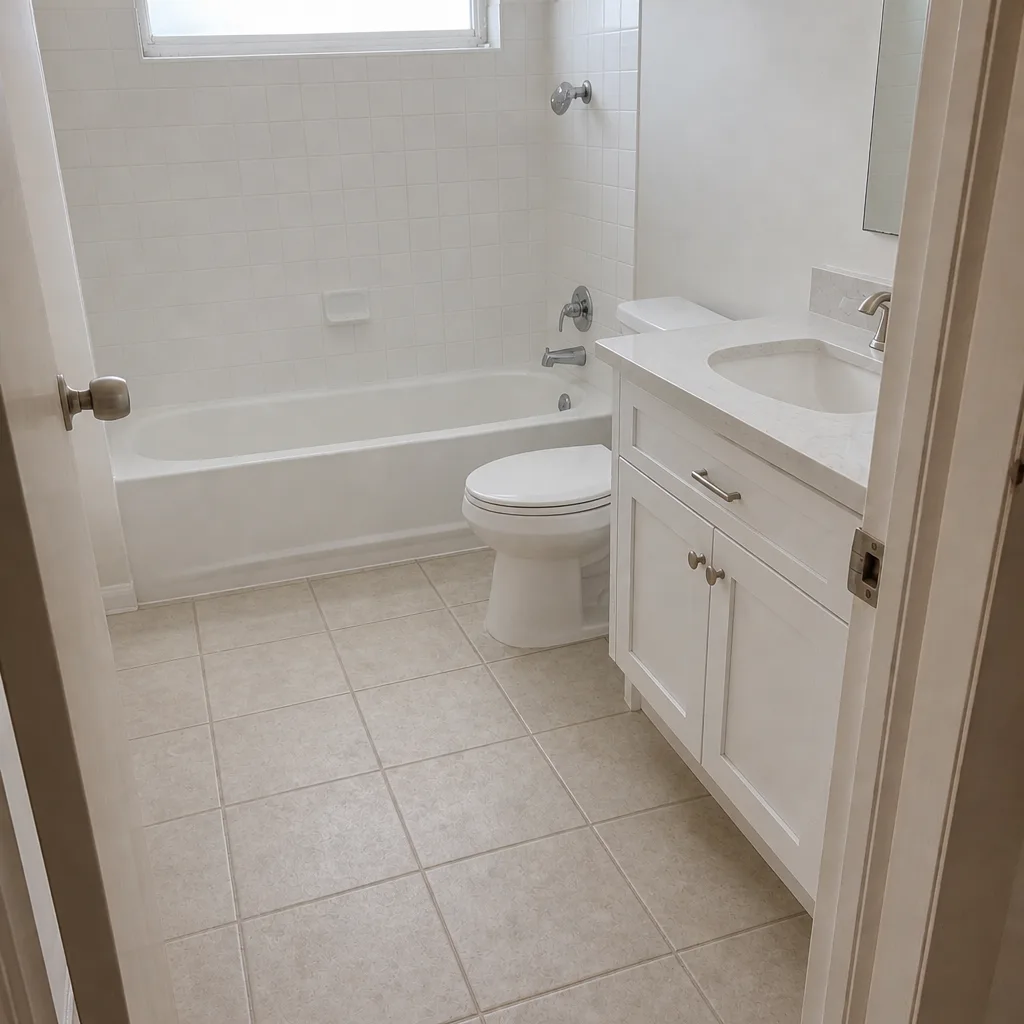 After
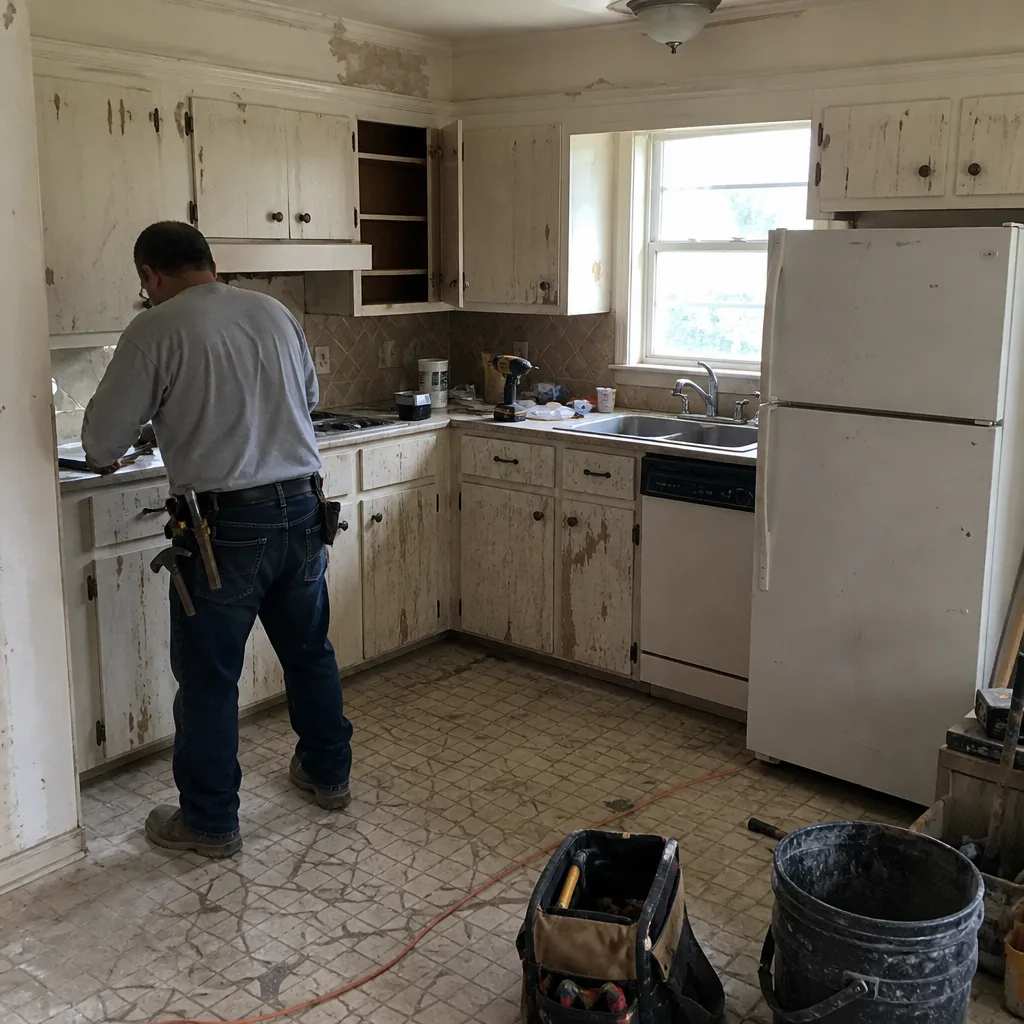 Before
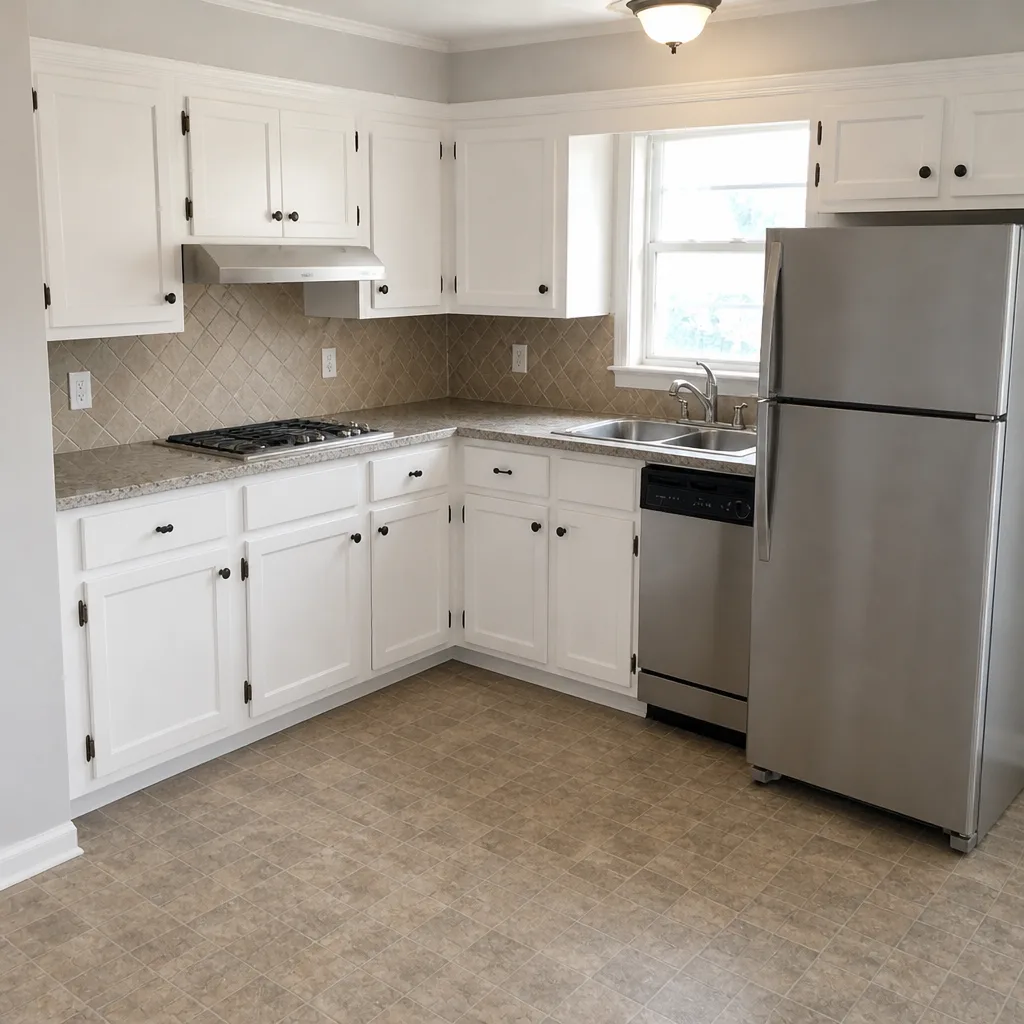 After
When to Call a Professional
Call a contractor when any single sign below is clearly present, and when any two signs overlap:
- Floor deflection you can feel through your shoe, especially near the toilet flange
- Grout lines that have turned brown or black around the shower or tub and return after cleaning
- Efflorescence on the exterior shower wall or the wall behind the shower
- Musty smell that returns within 72 hours of cleaning
- Moisture-meter reading above 16% in the wall behind the shower
- Shower floor that stays damp more than a few hours after use
- Galvanized supply lines with low hot-water pressure or rusty water at the tap
Rowan Construction Group Hialeah offers free estimates in Hialeah – a written flat price with a written scope and a written warranty before any work starts. Call (888) 836-5914 to schedule your estimate. Crews are background-checked and uniformed, calls are answered by a live person 24/7, and every visit includes a documented photo record as standard, not as an upgrade. Our technicians have up to 19 years of experience with the Hialeah housing stock this guide describes.
Frequently Asked Questions
Normal flex is barely perceptible, uniform across the floor, and shows no grout cracking. A failing subfloor gives noticeably more in one spot than another, often accompanied by cracked grout, a musty smell, or a soft spot near the toilet. If you can feel it through your shoe or see a grout gap open as you shift weight, treat it as a warning sign and get a written estimate. Call (888) 836-5914 for a free evaluation.
Brown or black grout concentrated around the shower, tub, or toilet usually means water is migrating beneath the tile and wicking up through the porous grout, carrying minerals and organic matter with it. The color change typically appears 6-10 months before tile starts to pop loose. If the dark lines return within 30 days of cleaning, get a written estimate rather than another grout sealer application.
A planned bathroom remodel in Hialeah typically runs $12,000-$22,000 for a full gut at mid-grade. An emergency remodel with subfloor repair, cavity mold remediation, and water damage to the ceiling below typically runs $20,000-$36,000 – often with a week of displaced living added in. The premium is almost entirely remediation and structural repair, not fixtures. Call (888) 836-5914 for a free written estimate before a warning sign becomes a failure.
If your Hialeah home was built before about 1975 and still has original galvanized supply lines, yes – plan the re-pipe into the remodel. Galvanized pipe has a 40-50 year service life and most of those installs are past it. New tile over failing plumbing is a short-lived win that costs more to fix later. Our written estimate itemizes the re-pipe as its own line so you can see the cost before you decide.
Surface mold wipes off and doesn’t return quickly. Cavity mold shows as bubbling paint, soft drywall, dark staining at baseboards, or a musty smell that returns within 72 hours of cleaning. A pin-type moisture meter reading above 16% in the wall behind the shower confirms a cavity issue. Cavity mold is a demolition problem, not a cleaning problem – call a licensed contractor before assuming a bleach spray will solve it.
No. Under Clause 1 of The Haven Standard, the price is written before anyone picks up a tool, and no change proceeds until a signed change order is in place. That’s the discipline that has kept Rowan’s projects within a few percent of the agreed cost across 4,000-plus jobs. The quote is a flat price with a written scope and a written warranty – not “call for a quote.” Call (888) 836-5914 to schedule your free estimate.
The Bottom Line
The eight conditions in this guide – floor deflection, grout color change, failing shower pan, cavity mold, galvanized plumbing, cast iron drain stacks, terrazzo that was tiled over, and efflorescence – all appear 6-18 months before the failure they predict. In Hialeah’s 1950s-1970s housing stock, they show up more often and more consistently than in newer construction, and the emergency premium for ignoring them runs $6,000-$14,000 on top of a planned remodel. Read the signs early, get a written estimate, and plan the project on your budget rather than the failure’s. Our Home Additions & ADU in Hialeah guide covers how a bathroom project sequences with larger structural work if you’re planning both. If you’re ready to price the work, call (888) 836-5914 for a free estimate – a written flat price, a written scope, and a written warranty before any work starts.
Written by the team at Rowan Construction Group Hialeah.